How AI is Shaping the Future of Education: The Revolution Has Just Begun
Keywords: Artificial Intelligence in Education, Future of Learning, AI Tools for Teachers, Personalized Learning, EdTech, AI Classrooms, Digital Education
Introduction: A Silent Revolution in the Classroom
Imagine walking into a classroom where lessons adapt to your learning speed, assignments grade themselves, and a virtual tutor understands your every doubt — instantly. Sounds futuristic?
It’s not. It’s happening right now, quietly transforming how we teach and learn.
Artificial Intelligence (AI) isn’t just a tech trend — it’s a revolution redefining education itself. The classrooms of tomorrow are already being built today, powered by intelligent systems that understand, analyze, and evolve alongside students.
But how exactly is AI shaping this transformation? Let’s pull back the curtain.

- Personalized Learning: Every Student, Their Own Path
One of the most exciting ways AI is transforming education is through personalized learning. Traditional education often follows a “one-size-fits-all” approach, leaving fast learners bored and others struggling to keep up.
AI changes that. By analyzing student performance data, AI-powered platforms can customize lessons, adjust difficulty levels, and suggest specific exercises based on individual strengths and weaknesses.
Think of tools like Khan Academy’s AI Tutor or Coursera’s adaptive learning algorithms — they don’t just teach; they learn from you.

- Intelligent Tutoring Systems: Your 24/7 Study Partner
Gone are the days when students had to wait for office hours or tutoring sessions. With AI tutoring systems, learning support is available anytime, anywhere.
These systems, powered by natural language processing and deep learning, can simulate real conversations, offer instant feedback, and even detect when a student is confused.
Imagine asking, “Why does gravity affect mass differently in space?” — and your AI tutor not only answers but also adjusts its explanation to your grade level.
It’s like having a personal mentor in your pocket.
- Automating the Educator’s Workload
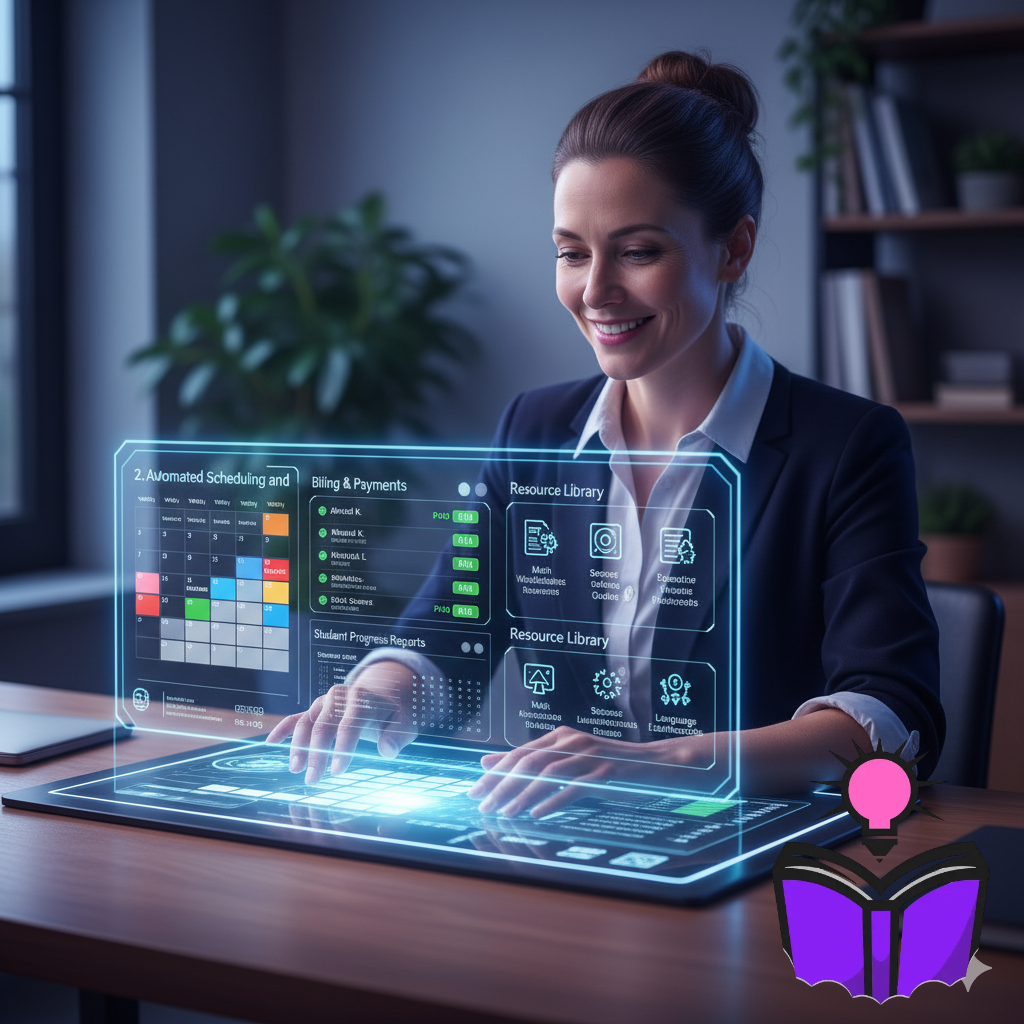
Teachers are the heart of education, but administrative tasks often consume hours that could be spent inspiring students.
AI tools are stepping in to automate grading, attendance tracking, and even plagiarism detection, freeing educators to focus on what truly matters — teaching.
Platforms like Gradescope and Turnitin’s AI-based detectors already help teachers grade faster and smarter.
What’s more? AI can even generate lesson plans or recommend teaching strategies based on classroom analytics.
The suspenseful question is — will AI ever replace teachers?
The answer: No — but it will redefine their roles. Teachers will evolve into learning designers, guiding students through technology-driven experiences.
- Data-Driven Insights: Predicting Success Before It Hppens
AI’s ability to collect and analyze vast amounts of data gives schools and institutions the power to predict learning outcomes.
By monitoring student engagement and performance patterns, AI can identify at-risk learners early, enabling timely interventions before grades fall.
This predictive insight could one day reduce dropout rates globally — a transformation we’ve only begun to witness.

- The Future Classroom: Blending Human Intelligence with Artificial Intelligence
Picture this: a classroom where AI-powered VR environments take you inside a human cell or onto the surface of Mars; where real-time translation breaks down language barriers; where virtual labs let you experiment fearlessly.
That’s not a dream — that’s AI-driven immersive education, already being tested by leading universities.
In the next decade, we may see AI mentors collaborating with teachers, AI counselors supporting emotional well-being, and AI-driven curricula updating themselves as global knowledge expands.
Conclusion: Education Will Never Be the Same Again
AI isn’t just shaping the future of education — it’s reimagining it.
From personalized learning to predictive analytics, from smart tutoring to intelligent classrooms, the transformation is unstoppable.
Yet, amidst the algorithms and automation, one truth remains: education is still about people.
AI is the tool, but curiosity, empathy, and creativity will always be the fuel.
So, the next time you open a textbook or log into a class, remember — the future of education is already learning with you