
🌐 How Virtual Reality is Transforming Education: The Future of Learning Has Arrived
Imagine stepping into ancient Rome, conducting a dangerous chemistry experiment, or exploring the solar system—all without leaving your classroom.
Sounds like science fiction? It’s not. This is the incredible power of Virtual Reality (VR), and it’s rapidly transforming the way we learn, teach, and experience knowledge.
In today’s world, education is no longer confined to textbooks and blackboards. With VR technology paving new digital pathways, students are now living the lessons they once merely read about. Let’s dive deep into how this technology is rewriting the rules of learning—and why educators worldwide are calling it the “future of education.”
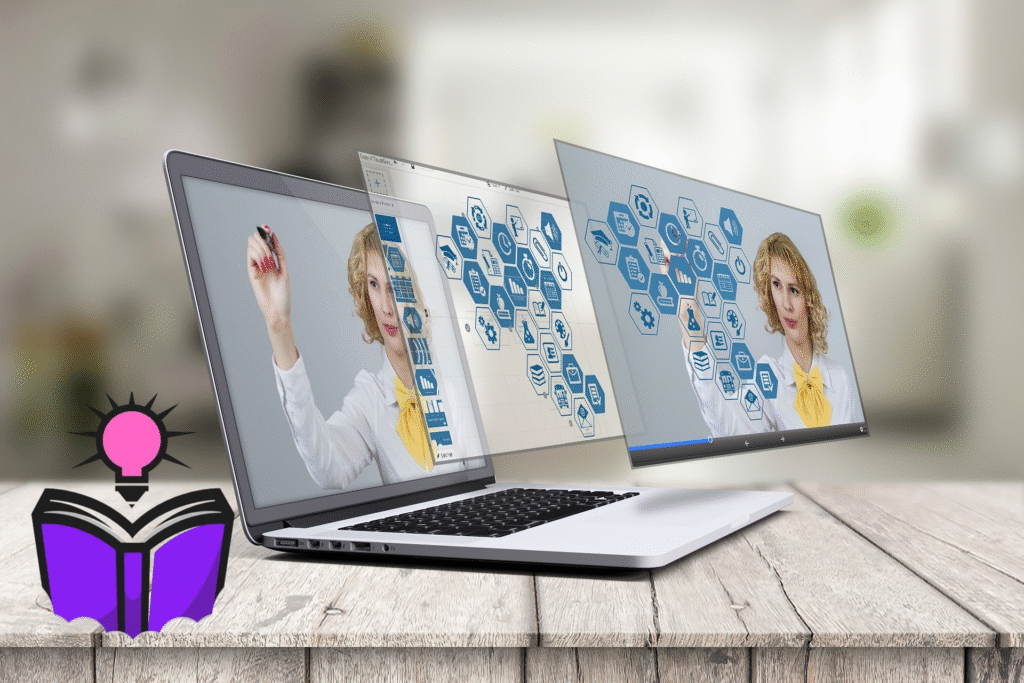
🎓 What is Virtual Reality in Education?
Virtual Reality (VR) is an immersive technology that places users inside a computer-generated 3D environment. With a VR headset, learners can interact with virtual worlds—whether it’s the inside of a human cell or the depths of the ocean—making education more interactive, engaging, and memorable.
In education, VR bridges the gap between theory and experience. Instead of imagining how volcanoes erupt, students can stand on the edge of one and watch the molten lava flow.
🚀 The Top Ways VR is Revolutionizing Learning
1. Immersive Learning Experiences
Traditional learning often struggles to hold attention. But VR flips the script—students are no longer passive observers; they become active participants.
For example, in biology, a student can shrink down to microscopic size to observe blood cells flowing through veins. The result? Deeper understanding and stronger retention.
2. Safe and Risk-Free Training
Medical students can perform surgeries virtually. Engineering students can test complex designs without real-world consequences.
VR creates a safe sandbox for failure, where learners can experiment freely, make mistakes, and learn without fear.
3. Breaking Geographical Barriers
VR eliminates distance. A student in India can take a virtual tour of the Louvre Museum or attend a Harvard lecture in real time.
Education becomes truly global and accessible—no passports, no travel costs, just a headset and an internet connection.
4. Special Education Empowerment
For students with disabilities, VR offers new levels of accessibility. It can simulate real-world environments, teach social skills, or even help with speech therapy—making learning inclusive and personalized.
5. Virtual Field Trips
Imagine exploring the Great Wall of China or diving into coral reefs—all within a classroom.
Teachers can use VR to take students on virtual field trips that enrich understanding, fuel curiosity, and make lessons unforgettable.
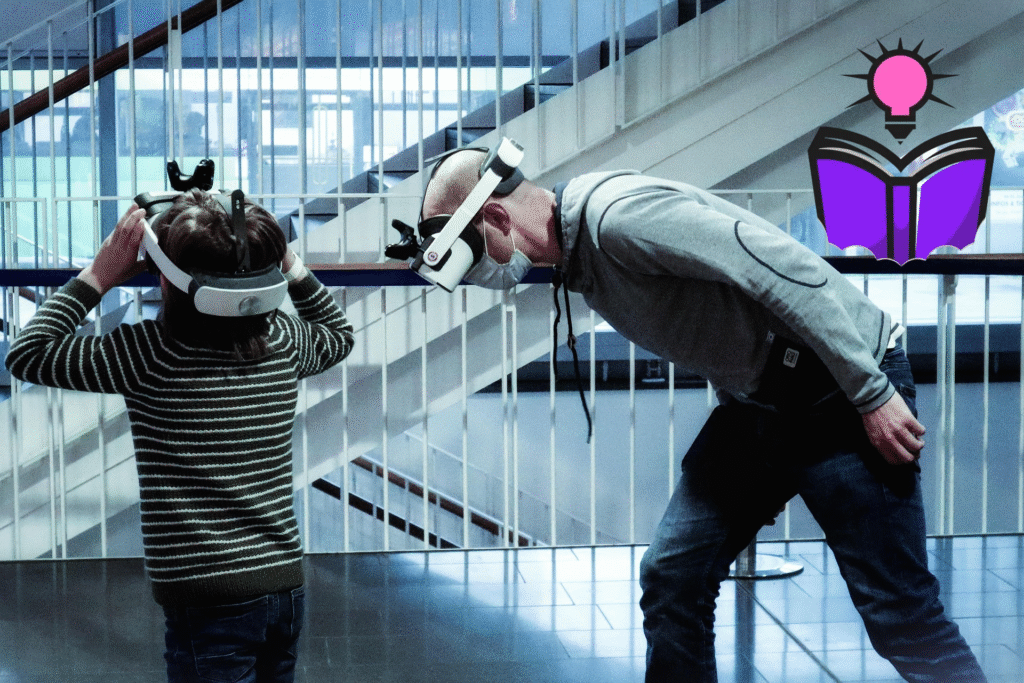
💡 The Hidden Power: Engagement and Retention
Research reveals that students retain up to 75% of what they experience, compared to only 10% of what they read. VR’s immersive nature activates multiple senses, which enhances memory and understanding.
When learners see, hear, and feel concepts, education transforms from memorization to meaningful experience.
🧠 The Future of Education is Virtual
Education systems worldwide are already adopting VR-based platforms. Schools are using Google Expeditions, zSpace, and ClassVR, while universities are creating full VR laboratories.
Soon, virtual classrooms will be the new normal—where teachers and students interact in lifelike digital environments.
But here’s the suspenseful twist—this is just the beginning.
What if one day, students could enter a fully AI-generated world, where every historical figure, ecosystem, or galaxy can talk back, adapt, and teach?
That’s not far away. The boundaries between real and virtual are fading, and with every breakthrough, VR inches closer to becoming education’s most powerful tool.
🔍 SEO Keywords (Integrated Naturally)
- Virtual Reality in Education
- How VR is transforming learning
- Future of virtual classrooms
- Benefits of VR in education
- Immersive learning technology
- Virtual field trips
- Educational technology trends
🌟 Final Thoughts
The era of chalk and talk is evolving into click and explore.
Virtual Reality isn’t replacing teachers—it’s empowering them. It’s making learning limitless, interactive, and deeply human.
As the digital and physical worlds merge, one truth remains:
The future of education is not about learning information—it’s about living it.