
How to Create a Study Plan for Exam Week (Step-by-Step Guide for Maximum Results)
Exam week is creeping closer.
You feel it—the quiet tension in classrooms, the rising pressure in group chats, the countdown on the calendar.
You tell yourself, “I’ll start tomorrow.”
But then tomorrow becomes the next day… and suddenly the exam is days away.
Here’s the twist: you still have enough time to take control.
Creating a powerful, realistic, and high-performance study plan can turn exam fear into exam confidence.
And today, you’ll learn exactly how to build that plan—one that keeps you focused, motivated, and calm through the chaos of exam week.
Let’s begin.
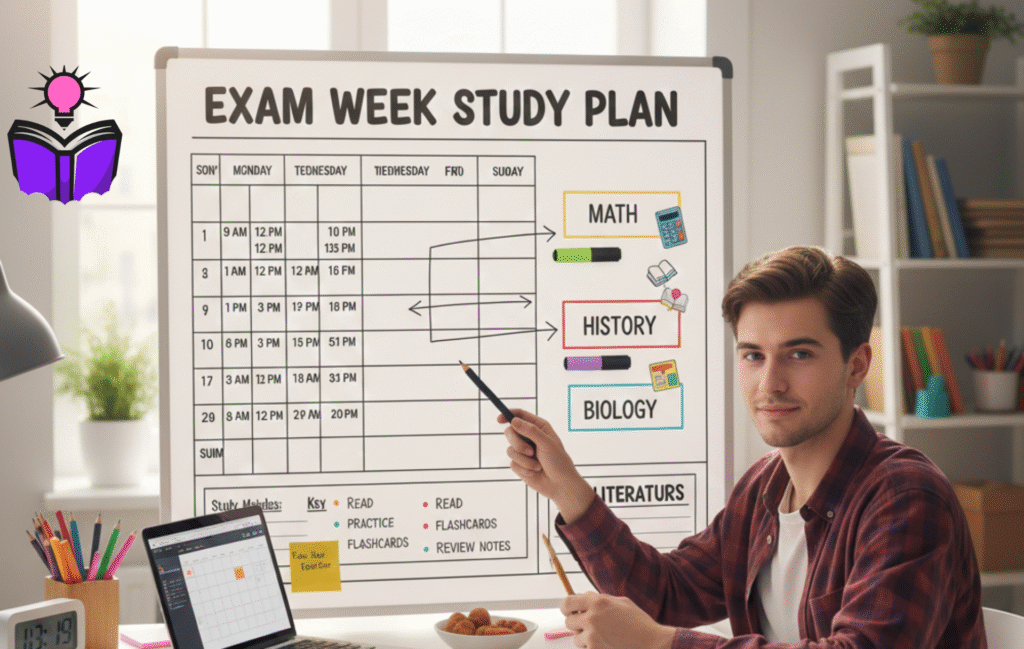
1. Start With a Bird’s-Eye View of Your Exam Week
Before you open a single notebook, get clear on the battlefield ahead.
What you need to list:
- All exam dates and times
- Topics or chapters covered in each exam
- Your current confidence level (high, medium, low)
- Materials you need (notes, books, past papers, online resources)
This overview helps you see which exams require more attention and which ones you can prepare for quickly.
Pro Tip (SEO Keyword: exam preparation strategy):
Focus on the subjects with the largest amount of content or your lowest confidence first. They require more spaced-out revision.
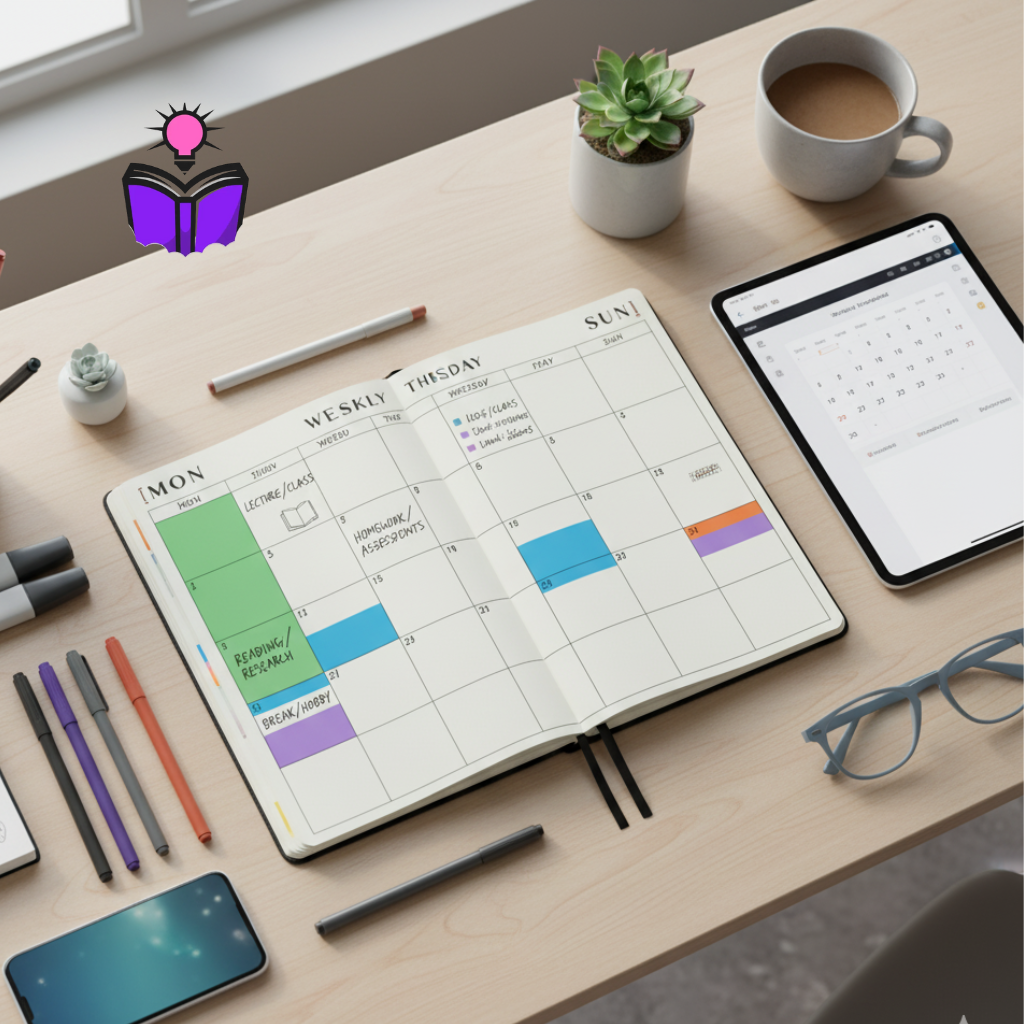
2. Break Big Subjects Into Smaller, Attackable Topics
A giant textbook is terrifying.
Ten small topics? Not so much.
Chunking your subjects makes your plan more realistic and reduces overwhelm.
Example:
Biology Exam
- Cell structure
- Genetics
- Evolution
- Human physiology
- Ecology
- Experiments & data interpretation
Mini topics give you the sense of progress your brain craves—and progress fuels motivation.

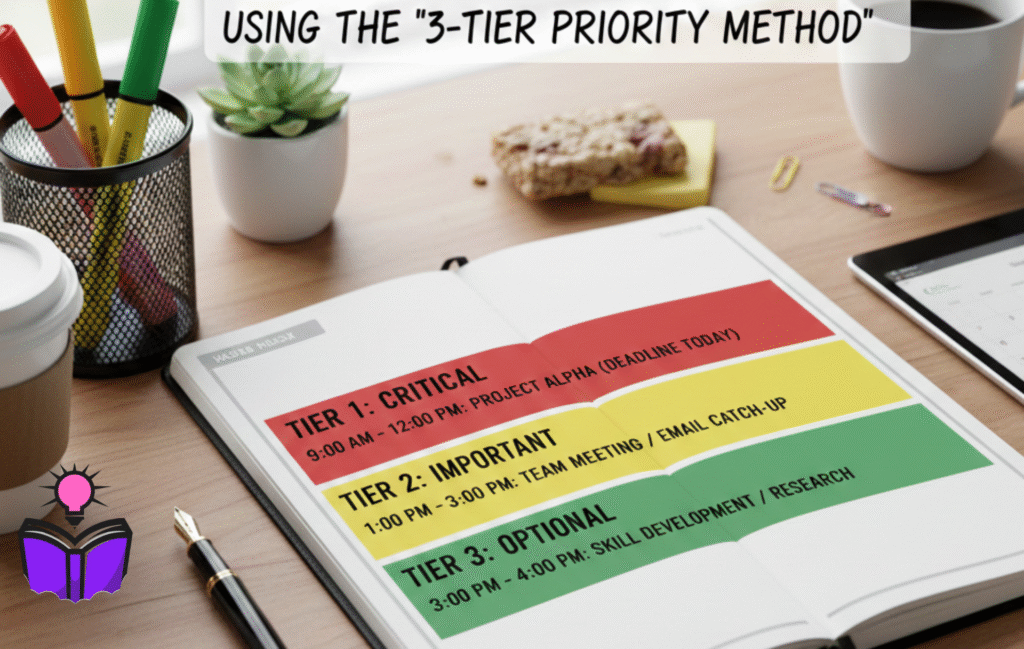
3. Assign Time Blocks Using the “3-Tier Priority Method”
This is where the suspense becomes strategy.
Tier 1 – High Priority
- Subjects you’re weakest in
- Subjects with the nearest exam dates
- Units you haven’t fully understood yet
Tier 2 – Medium Priority
- Subjects you’re okay with but need revision
- Chapters you haven’t reviewed recently
Tier 3 – Low Priority
- Subjects you know well
- Topics with minimal weight in the exam
Distribute your study time according to these tiers. Your schedule will instantly feel structured, balanced, and doable.
4. Build Your Daily Exam-Week Schedule
Now comes the part that turns chaos into clarity.
Your daily plan should include:
- 3–4 study sessions (45–60 minutes each)
- 10–15 minute breaks
- One long break (to prevent burnout)
- A quick review session at night
- Time for sleep—7 to 8 hours is non-negotiable
A sample layout:
| Time | Task |
|---|---|
| 8:00–9:00 AM | High-priority subject revision |
| 9:15–10:15 AM | Practice questions |
| 10:30–11:30 AM | Medium-priority topic |
| 1:00–2:00 PM | Low-priority review |
| 4:00–5:00 PM | Past papers |
| 8:00–9:00 PM | Light review + memorization |
This structure improves retention and stops last-minute panic from taking over.
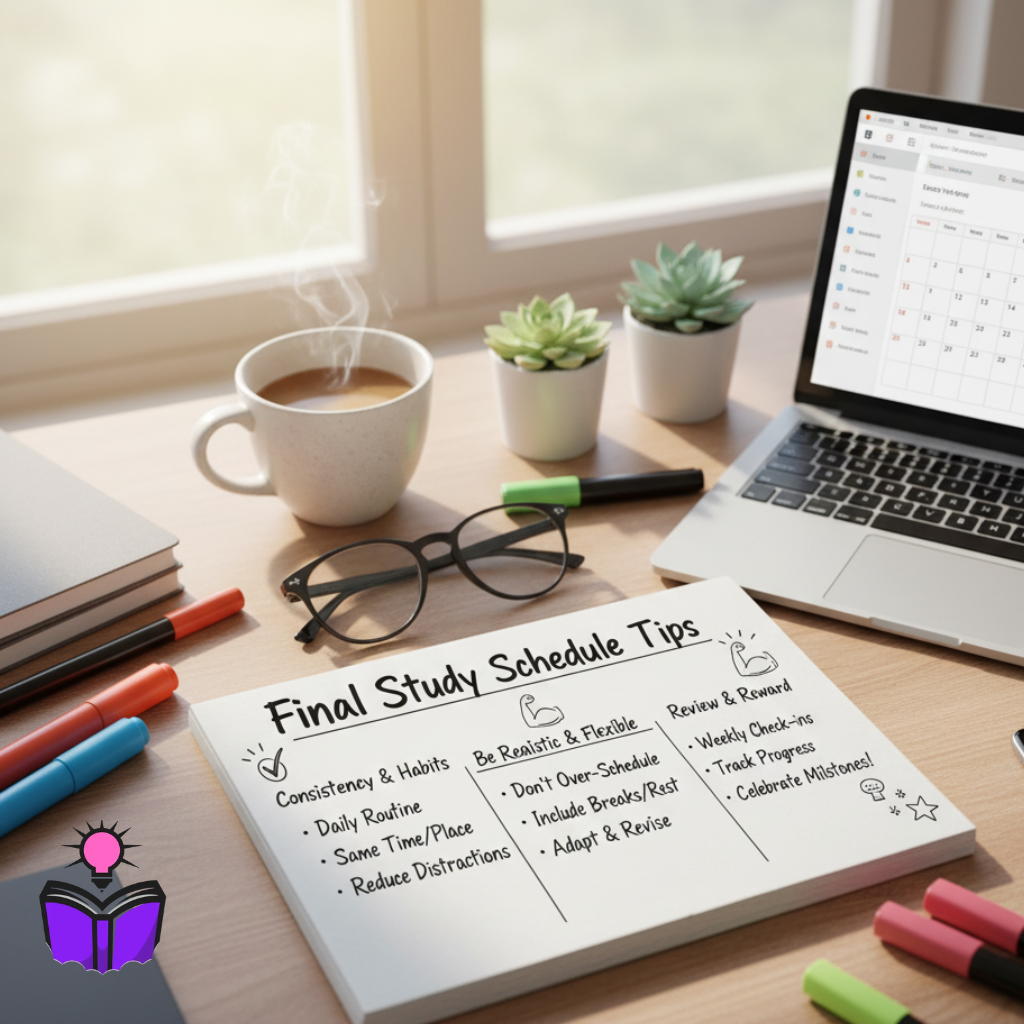
5. Use Smart Study Techniques to Maximize Memory
To make your study plan extremely effective, integrate proven learning techniques:
• Active recall
Test yourself instead of re-reading.
• Spaced repetition
Review material at increasing intervals.
• The Feynman Technique
Explain topics as if teaching someone else.
• Past exam questions
This is the closest thing to predicting the exam—you’ll know style, difficulty, and pattern.
Together, these methods can double your retention and cut study time in half.

6. Track Your Progress Like a Strategist
A study plan is not “set it and forget it.”
Each night, ask yourself:
- What did I complete today?
- Where did I struggle?
- What needs more time tomorrow?
- Did I stay consistent with breaks and focus?
Adjust your plan based on your energy, progress, and deadlines. Flexibility keeps your momentum strong.

7. Don’t Ignore Your Mental Fitness
A well-designed study plan is only effective if your brain is in good condition.
Keep yourself at peak performance by:
- Sleeping enough
- Eating energy-boosting foods (nuts, fruit, water, whole grains)
- Taking breaks outdoors
- Avoiding multitasking
- Turning off notifications during study blocks
The goal isn’t just to survive exam week—it’s to conquer it.
Final Thought: Your Study Plan Is Your Superpower
You’re not just preparing for exams.
You’re building discipline, structure, and confidence—skills that will help you long after the final bell rings.
Exam week doesn’t have to be a nightmare.
With a smart, strategic study plan, you’ll walk in prepared… and walk out victorious.
Are you ready to build your personalized plan?
I can create one for you based on your subjects, time availability, and exam dates—just tell me!