
The Role of EdTech in the Evolution of Education: How Technology Is Transforming Learning
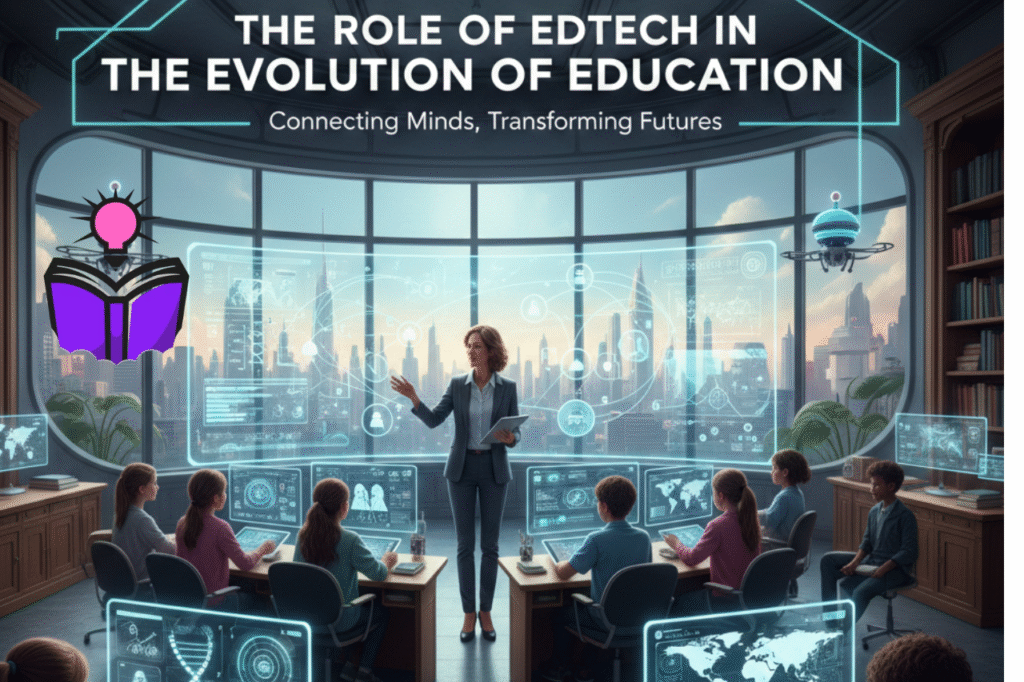
In the last decade, education has experienced one of the most significant transformations in its history—and at the center of this change is Educational Technology (EdTech). From AI-powered tools to virtual classrooms, EdTech is reshaping how students learn, how teachers teach, and how institutions operate. Its impact continues to grow as technology becomes more accessible and integrated into everyday life.
Whether you’re an educator, student, parent, or ed-industry professional, understanding the role of EdTech is essential to navigating the future of learning.
⭐ What Is EdTech?
EdTech refers to the use of digital tools, platforms, and technologies designed to enhance teaching and learning experiences. This includes everything from simple classroom apps to advanced AI systems, VR simulations, and data-driven learning platforms.
1. EdTech Makes Learning More Accessible
One of the biggest advantages of EdTech is its ability to break down traditional barriers to education.
How EdTech improves accessibility:
- Remote learning platforms allow students to learn from anywhere in the world.
- Assistive technologies (screen readers, speech-to-text tools) support learners with disabilities.
- Affordable digital resources reduce dependence on costly textbooks.
EdTech ensures that education is no longer limited by geography, economic status, or physical ability.
2. Personalized Learning Through Intelligent Technology
Traditional classrooms often struggle to meet the diverse needs of students. EdTech solves this with personalized learning, tailoring content to each learner’s speed, style, and progress.
Examples of personalized EdTech tools:
- AI-driven learning platforms that adapt lessons based on performance.
- Gamified apps that motivate students through levels and rewards.
- Data analytics that help teachers identify strengths and weaknesses.
This personalized approach boosts engagement and ensures no student is left behind.

3. Enhancing Teacher Efficiency and Engagement
EdTech is not just for students—teachers benefit significantly as well.
How EdTech supports educators:
- Automated grading tools save hours of manual work.
- Learning Management Systems (LMS) simplify assignment distribution and tracking.
- Digital collaboration tools support interactive lessons.
With EdTech, teachers can focus more on teaching and less on administrative tasks.
4. Transforming Classrooms With Interactive Learning
Gone are the days of static textbooks and chalkboards. Modern classrooms thrive on interactive, multimedia-rich environments.
EdTech tools that enhance engagement:
- Interactive whiteboards
- AR/VR simulations
- Virtual labs
- Digital quizzes and polls
These tools bring learning to life, helping students understand complex concepts through visual and hands-on experiences.

5. Preparing Students for a Digital Future
The workforce is evolving rapidly, and EdTech is key to ensuring students are ready for the demands of the future.
EdTech enhances future-ready skills such as:
- Digital literacy
- Critical thinking
- Collaboration in virtual environments
- Problem-solving with tech tools
By integrating technology into learning early, students develop skills needed in science, engineering, business, and emerging industries.

6. Supporting Lifelong Learning and Skill Development
Education doesn’t end with graduation. EdTech supports learners of all ages through flexible online courses, micro-learning modules, and certification programs.
This shift empowers professionals to upskill or reskill from the comfort of home, fueling career growth and personal development.

7. Data-Driven Decision Making in Education
Data analytics is revolutionizing education administration.
Benefits of data-powered EdTech:
- Insight into student performance trends
- Early identification of at-risk learners
- Better curriculum planning
- Informed teaching strategies
With real-time data, institutions can create learning experiences that are both effective and efficient.
Conclusion: EdTech Is Not the Future—It’s the Present
The evolution of education is driven by innovation, and EdTech stands at the forefront. From improving accessibility to personalizing learning experiences, technology is shaping a more inclusive, interactive, and effective educational landscape.
As EdTech continues to grow, classrooms will become smarter, learning will become more engaging, and education will become more connected than ever before.
If the goal is to build a future where everyone can learn in their own way, at their own pace, and from anywhere—EdTech is the key.