
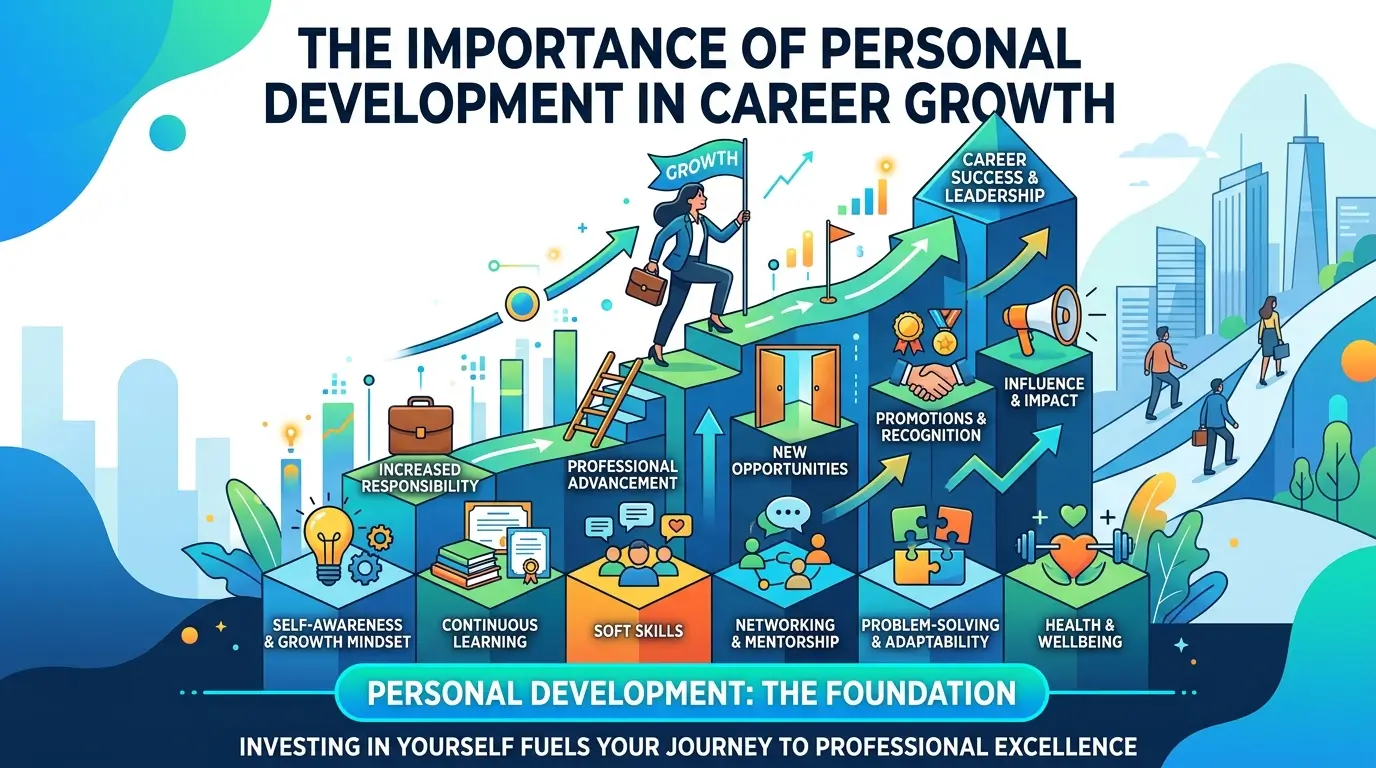
The Importance of Personal Development in Career Growth
The Importance of Personal Development in Career Growth
Introduction
Success in today’s professional world requires more than just a college degree or technical expertise. While education and job-specific skills are essential, they are no longer enough to guarantee long-term career success. Employers across the United States are increasingly looking for professionals who demonstrate leadership, adaptability, communication skills, emotional intelligence, and the ability to grow continuously.
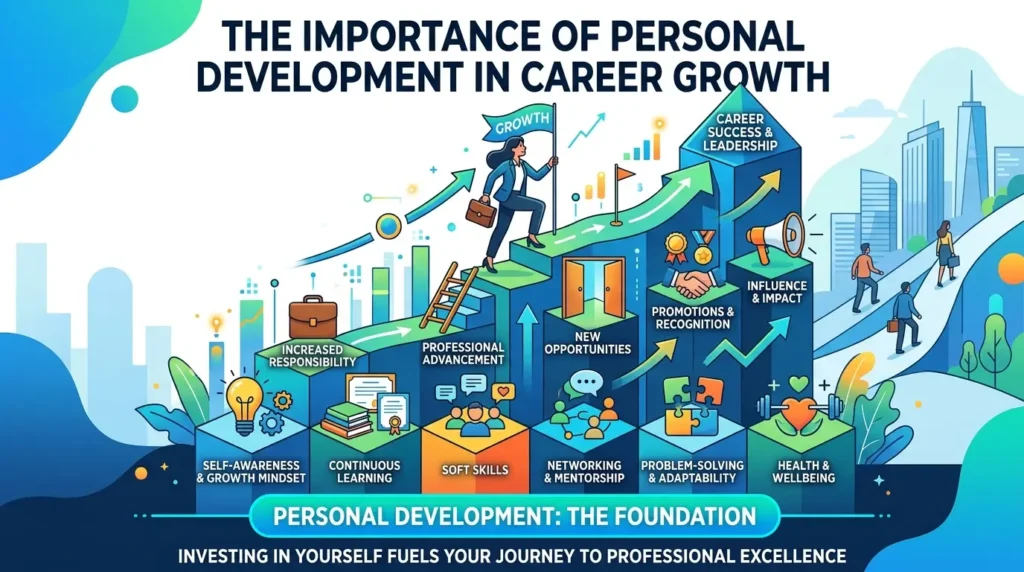
This is where personal development becomes extremely important.
Personal development is the process of improving your mindset, habits, knowledge, and interpersonal abilities to become more effective in both personal and professional life. It is a lifelong journey that helps individuals maximize their potential, improve performance, and achieve meaningful career goals.
Whether someone is just starting their career or aiming for executive leadership, personal development plays a critical role in professional advancement. It helps people adapt to workplace changes, overcome challenges, build confidence, and create better opportunities for themselves.
In a highly competitive job market like the United States, employees who actively invest in personal growth often stand out from the crowd. They become stronger communicators, better leaders, and more valuable team members. Most importantly, they position themselves for long-term career success.
This article explores why personal development matters in career growth, how it impacts professional success, and practical ways individuals can improve themselves to thrive in the modern workplace.
What Is Personal Development?
Personal development refers to activities and habits that improve self-awareness, strengthen talents, increase quality of life, and support the achievement of goals. In the workplace, it involves developing both professional and personal skills that contribute to career advancement.
Unlike technical training that focuses on specific job functions, personal development improves the individual as a whole. It enhances qualities such as confidence, communication, emotional intelligence, leadership, productivity, and resilience.
For example, an employee may have excellent technical knowledge but struggle with teamwork or time management. Another employee with average technical skills but strong communication and leadership abilities may progress faster in their career. This demonstrates how personal development directly influences professional growth.
Personal development is not something that happens overnight. It requires continuous effort, learning, and self-reflection. Professionals who embrace lifelong growth are often better prepared for opportunities and challenges throughout their careers.
Why Personal Development Is Essential for Career Growth
Builds Strong Professional Skills
One of the biggest advantages of personal development is skill improvement. Every industry continues to evolve due to technology, market demands, and changing workplace expectations. Employees who stop learning often find themselves falling behind.
Personal development encourages individuals to improve important workplace skills such as communication, leadership, problem-solving, adaptability, and organization. These abilities increase productivity and make employees more effective in their roles.
For instance, a professional who develops strong presentation skills may perform better during meetings and client interactions. Someone who improves time management can complete projects more efficiently and reduce stress.
Employers value workers who actively seek growth because they contribute more to the organization. The more skills a person develops, the more opportunities they create for promotions, salary increases, and leadership roles.
Increases Confidence and Self-Belief
Confidence is a major factor in career success. Professionals who believe in themselves are more likely to take initiative, share ideas, apply for promotions, and pursue challenging opportunities.
Personal development helps build confidence by encouraging individuals to recognize their strengths and work on their weaknesses. As people achieve goals and improve their abilities, their self-esteem naturally grows.
Confidence also affects how others perceive a professional in the workplace. Employees who communicate confidently often earn greater trust and respect from managers and coworkers.
In job interviews, networking events, and leadership situations, confidence can make a lasting impression. It allows professionals to express themselves clearly and present their value effectively.
Many talented individuals struggle in their careers simply because they lack confidence. Personal development helps remove this barrier and empowers people to pursue greater success.
The Role of Communication in Professional Success
Communication is one of the most important skills in any career. Regardless of industry, professionals interact with coworkers, clients, managers, and customers daily.
Poor communication can lead to misunderstandings, workplace conflict, and reduced productivity. On the other hand, effective communication creates stronger relationships, improves teamwork, and increases professional credibility.
Personal development helps individuals improve verbal communication, listening skills, written communication, and emotional awareness.
Strong communicators know how to express ideas clearly and professionally. They listen actively, respond thoughtfully, and handle difficult conversations with confidence.
In leadership positions, communication becomes even more valuable. Managers who communicate effectively inspire teams, motivate employees, and create positive work environments.
Professionals who develop communication skills often experience faster career advancement because they become more influential within their organizations.
Personal Development Encourages Adaptability
The modern American workplace changes rapidly. Technology, automation, remote work, and evolving business strategies continue to reshape industries across the country.
Employees who resist change often struggle to remain competitive. Those who embrace learning and adaptability are more likely to succeed.
Personal development teaches individuals how to adapt to new environments, technologies, and responsibilities. It encourages a growth mindset that views challenges as opportunities rather than obstacles.
For example, during major workplace transitions such as digital transformation or remote work adoption, adaptable employees typically adjust more quickly and maintain productivity.
Employers highly value professionals who can remain flexible under pressure and learn new skills when needed. Adaptability has become one of the most important qualities in today’s job market.
By focusing on personal development, individuals strengthen their ability to handle uncertainty and thrive in changing professional environments.
Emotional Intelligence and Career Advancement
Emotional intelligence is another essential component of personal development. It refers to the ability to recognize, understand, and manage emotions while also understanding the emotions of others.
Professionals with high emotional intelligence often perform better in workplace relationships and leadership roles. They handle stress calmly, communicate effectively, and resolve conflicts professionally.
Emotional intelligence contributes to career growth in several important ways. It improves collaboration, strengthens teamwork, enhances leadership, and increases workplace satisfaction.
Employees who demonstrate empathy and emotional awareness are often viewed as trustworthy and dependable. Managers with strong emotional intelligence create healthier work environments and motivate employees more effectively.
In many organizations across the United States, emotional intelligence is now considered just as valuable as technical expertise.
Professionals who invest in developing emotional intelligence often become better leaders and stronger team members, which directly supports career advancement.
Leadership Development Through Personal Growth
Leadership is not limited to executives or managers. Every employee has the ability to develop leadership qualities that contribute to professional success.
Personal development helps individuals strengthen leadership skills such as decision-making, accountability, strategic thinking, and problem-solving.
Organizations prefer promoting employees who demonstrate leadership potential because these individuals positively influence workplace culture and team performance.
Leadership development also improves confidence and communication abilities. Professionals who can guide projects, support coworkers, and take responsibility often stand out within organizations.
Strong leaders are proactive rather than reactive. They identify opportunities, solve problems efficiently, and help teams remain focused on goals.
Personal growth creates a foundation for leadership by improving self-discipline, emotional control, and interpersonal effectiveness.
Even professionals who are not currently in management positions benefit from leadership development because it increases visibility and career opportunities.
Goal Setting and Career Progress
Successful professionals rarely achieve growth without direction. Goal setting is an essential part of personal development because it provides clarity, motivation, and accountability.
Career goals may include earning a promotion, increasing income, learning a new skill, starting a business, or transitioning into a different industry.
When people set clear goals, they become more focused and productive. They are able to prioritize important tasks and track progress over time.
Personal development supports goal achievement by improving discipline, consistency, and self-awareness.
Professionals who regularly evaluate their goals often identify areas where they need improvement. This allows them to make adjustments and continue progressing toward success.
Without goals, many employees become stuck in routines and lose motivation. Personal development encourages individuals to challenge themselves and pursue continuous growth.
Goal-oriented professionals are more likely to remain motivated, resilient, and committed to long-term success.
The Connection Between Personal Development and Employability
The job market in the United States is highly competitive. Employers are not only searching for qualified candidates but also for individuals who demonstrate initiative, professionalism, and strong interpersonal abilities.
Personal development improves employability by helping professionals stand out during hiring and promotion processes.
Candidates who continuously learn and improve themselves show employers that they are motivated and future-focused. This creates a strong impression during interviews and workplace evaluations.
Professionals who invest in self-improvement often perform better under pressure, communicate more effectively, and contribute positively to organizational culture.
Continuous learning is especially important in industries affected by technological advancements. Employees who develop new skills remain valuable even as industries evolve.
Personal development also strengthens professional branding. Certifications, leadership experiences, workshops, and networking activities demonstrate commitment to growth and excellence.
As automation and artificial intelligence continue transforming industries, human-centered skills developed through personal growth will become even more important.
Building Better Workplace Relationships
Career success is not based solely on performance metrics. Relationships also play a significant role in professional growth.
Employees who communicate respectfully, collaborate effectively, and support others often build stronger professional networks.
Personal development improves self-awareness and emotional intelligence, both of which contribute to healthier workplace relationships.
Strong professional relationships create opportunities for mentorship, collaboration, and career advancement. Employees with positive reputations are often considered first for promotions and leadership opportunities.
Networking is another important aspect of career growth. Building professional connections can lead to new job opportunities, partnerships, and industry insights.
Professionals who invest time in relationship-building often experience greater support throughout their careers.
Positive workplace relationships also improve job satisfaction and reduce stress, leading to better overall performance.
Overcoming Career Challenges Through Personal Development
Every professional experiences setbacks at some point. Challenges such as job loss, workplace stress, rejection, burnout, or career uncertainty are common.
Personal development helps individuals build resilience and maintain motivation during difficult times.
A growth mindset allows people to view setbacks as learning experiences rather than failures. This perspective encourages perseverance and long-term improvement.
Stress management techniques, emotional intelligence, and self-discipline all contribute to overcoming professional challenges effectively.
Professionals who focus on self-improvement are generally better prepared to handle uncertainty and adapt to changing circumstances.
Resilience is one of the most valuable traits in career growth because success rarely happens without obstacles.
Employees who can recover quickly from setbacks often emerge stronger and more experienced than before.
Continuous Learning and Long-Term Success
The most successful professionals understand that learning never stops. Continuous learning is a core principle of personal development and one of the keys to long-term career growth.
Industries evolve rapidly, and employees who fail to update their skills risk becoming outdated. Professionals who continue learning remain competitive and adaptable.
Continuous learning can include online courses, books, mentorship programs, workshops, certifications, and practical experiences.
Learning new skills also increases confidence and opens doors to additional career opportunities.
Employers appreciate employees who demonstrate curiosity and initiative because these individuals contribute to innovation and organizational growth.
Professionals who embrace lifelong learning are often better prepared for leadership positions and future industry trends.
Practical Ways to Invest in Personal Development
Personal development does not require major life changes. Small daily improvements can create significant long-term results.
Reading regularly can expand knowledge and improve critical thinking. Books focused on leadership, productivity, communication, and mindset are especially beneficial for career growth.
Seeking mentorship is another effective strategy. Learning from experienced professionals provides valuable insights and guidance.
Time management is equally important. Organizing schedules and prioritizing tasks improve productivity and reduce workplace stress.
Self-reflection also plays a key role in personal growth. Evaluating strengths, weaknesses, habits, and progress helps individuals identify areas for improvement.
Networking with professionals in similar industries creates opportunities for learning and career advancement.
Most importantly, consistency matters more than perfection. Small efforts made consistently over time lead to meaningful transformation.
The Future of Career Growth and Personal Development
The future workplace will continue prioritizing adaptability, emotional intelligence, communication, and continuous learning.
As automation handles more routine tasks, human-centered skills will become increasingly valuable. Creativity, leadership, empathy, and strategic thinking cannot easily be replaced by technology.
Organizations are already investing heavily in employee development programs because they recognize the connection between personal growth and business success.
Professionals who focus on personal development will have a significant advantage in future job markets. They will be more prepared to lead teams, solve complex problems, and navigate industry changes.
Career growth in the future will depend not only on technical knowledge but also on the ability to grow personally and professionally.
Individuals who embrace lifelong self-improvement will continue creating opportunities for success regardless of economic or technological changes.
Conclusion
Personal development is one of the most important factors in career growth. It improves confidence, communication, emotional intelligence, adaptability, leadership, and productivity.
In today’s competitive job market, technical skills alone are no longer enough to guarantee success. Employers increasingly value professionals who demonstrate self-awareness, initiative, and the ability to grow continuously.
By investing in personal development, individuals become more capable, resilient, and prepared for professional challenges and opportunities.
Career growth ultimately begins with personal growth. The more effort people put into improving themselves, the greater their chances of achieving long-term success and fulfillment.
Whether someone is beginning their professional journey or striving for executive leadership, personal development remains a powerful tool for building a successful and rewarding career.
Those who commit to lifelong learning and continuous self-improvement are not only more likely to succeed professionally but also more likely to lead meaningful and fulfilling lives.