Can Online Learning Replace Traditional College Degrees?
Exploring the future of education in a digital-first world
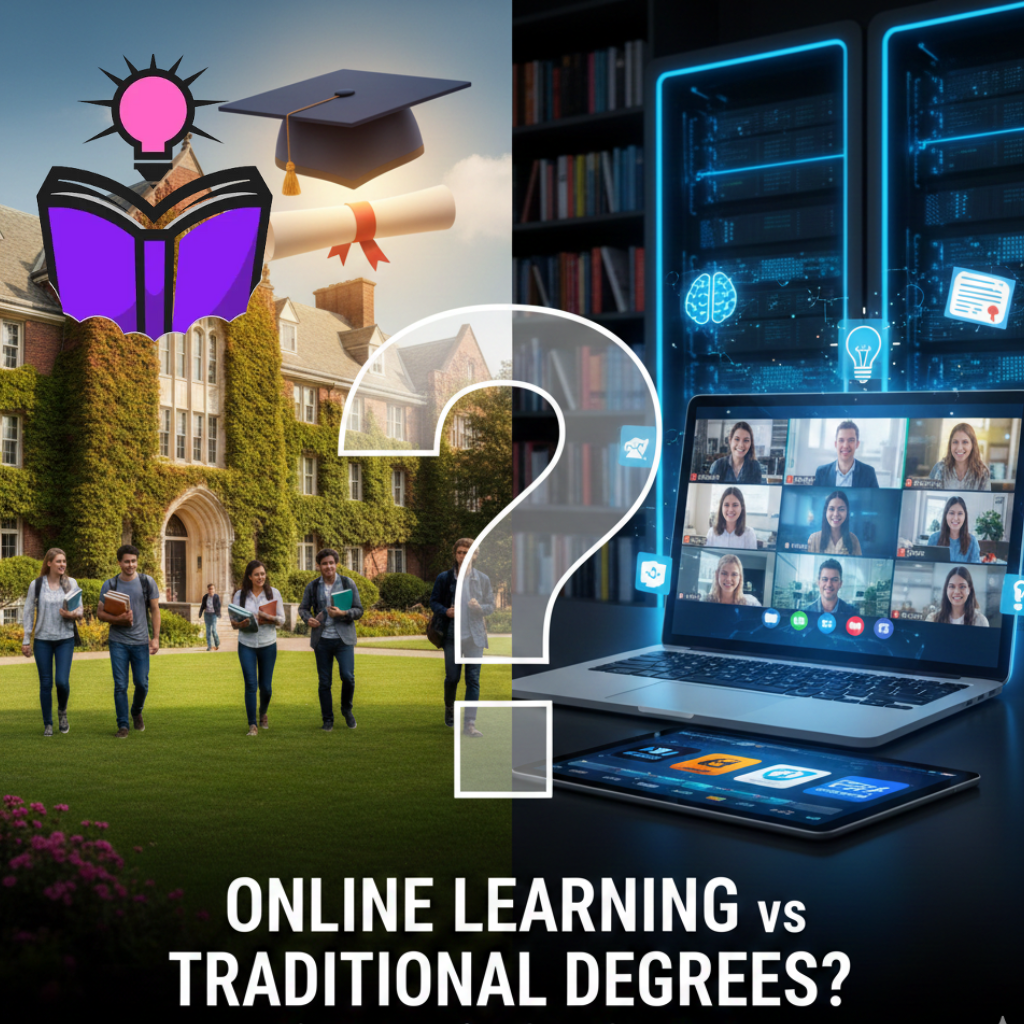
Over the past decade, online learning has transformed from a convenient alternative to a full-scale global movement redefining how we acquire knowledge. As digital platforms expand and traditional education costs rise, a major question has emerged:
Can online learning replace traditional college degrees?
This informative guide breaks down the advantages, limitations, and future possibilities of online education—helping students, parents, and professionals make smart, future-ready decisions.
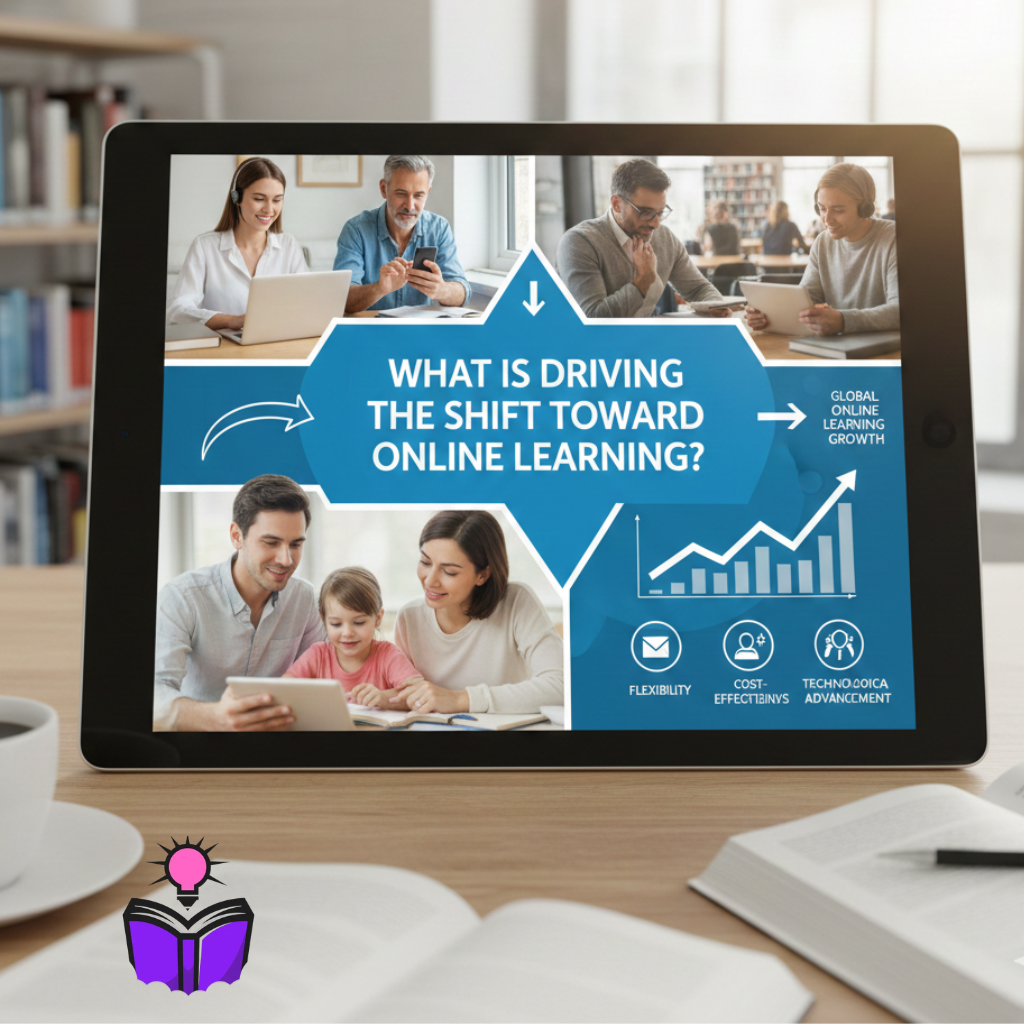
What Is Driving the Shift Toward Online Learning?
Today’s learners expect flexibility, affordability, and career relevance—three areas where online education excels. A few key factors fueling its growth include:
1. Accessibility Anywhere, Anytime
Online programs allow students to learn from any location, eliminating barriers such as commuting, relocation, or rigid class schedules. This is especially beneficial for working adults or individuals balancing family responsibilities.
2. Lower Costs
Digital programs often reduce tuition, textbook, and housing costs. For many, this makes high-quality education more achievable than ever before.
3. Career-Focused Skill Development
Online platforms offer highly targeted programs in tech, business, healthcare, and creative fields—skills that employers actively seek in a rapidly changing job market.
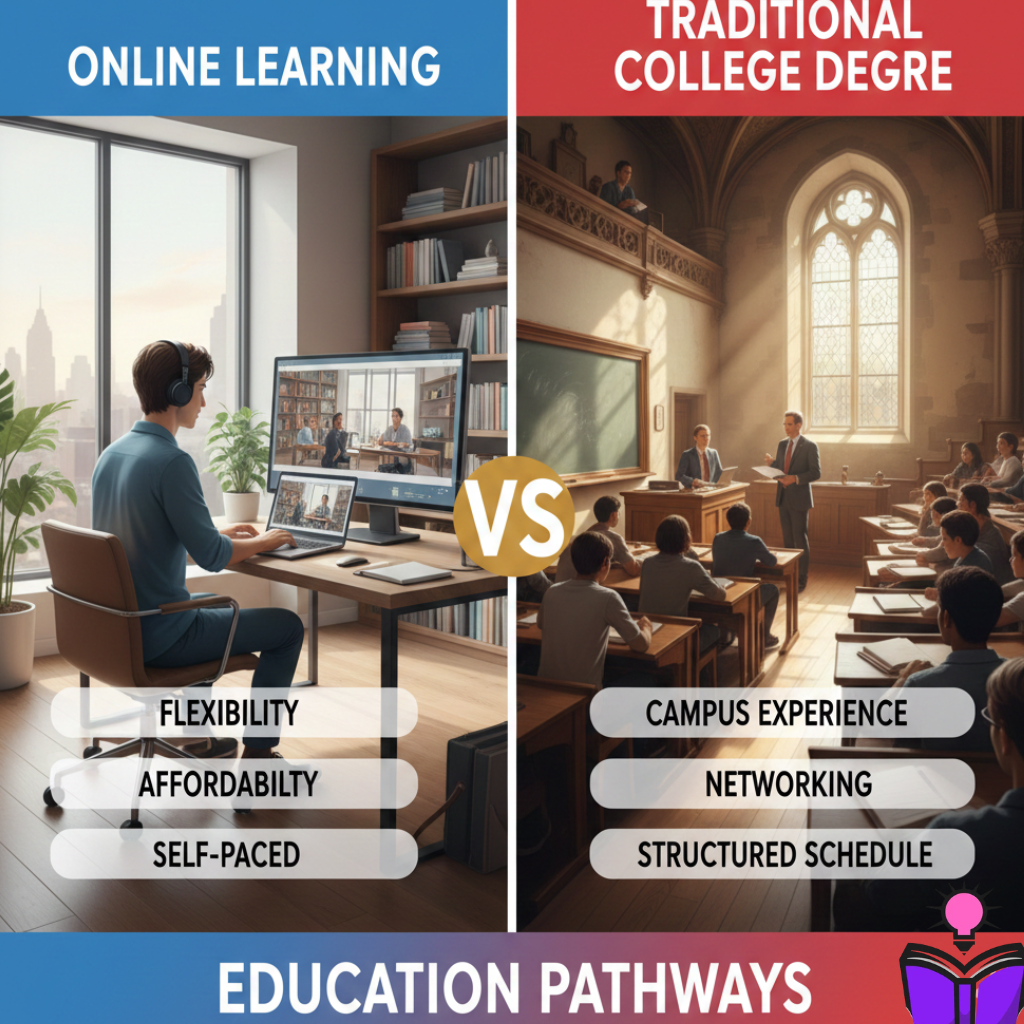
How Online Learning Compares to Traditional College Degrees
To understand whether online learning can replace traditional degrees, it’s essential to weigh both strengths and challenges.
✔ Flexibility vs. Structure
Online learning wins in flexibility, but traditional colleges provide structured schedules that some students rely on for discipline and academic consistency.
✔ Practical Learning vs. Hands-On Experience
While online courses excel in delivering knowledge and simulations, certain fields—such as engineering, medicine, or lab-based sciences—still require in-person training.
✔ Cost Efficiency vs. Campus Experience
Digital programs are more affordable, but they lack the immersive campus life that helps students build social, cultural, and leadership skills.
✔ Employability and Employer Perception
Many employers now accept accredited online degrees and certifications. However, prestigious universities and in-person programs still hold strong influence in competitive industries.
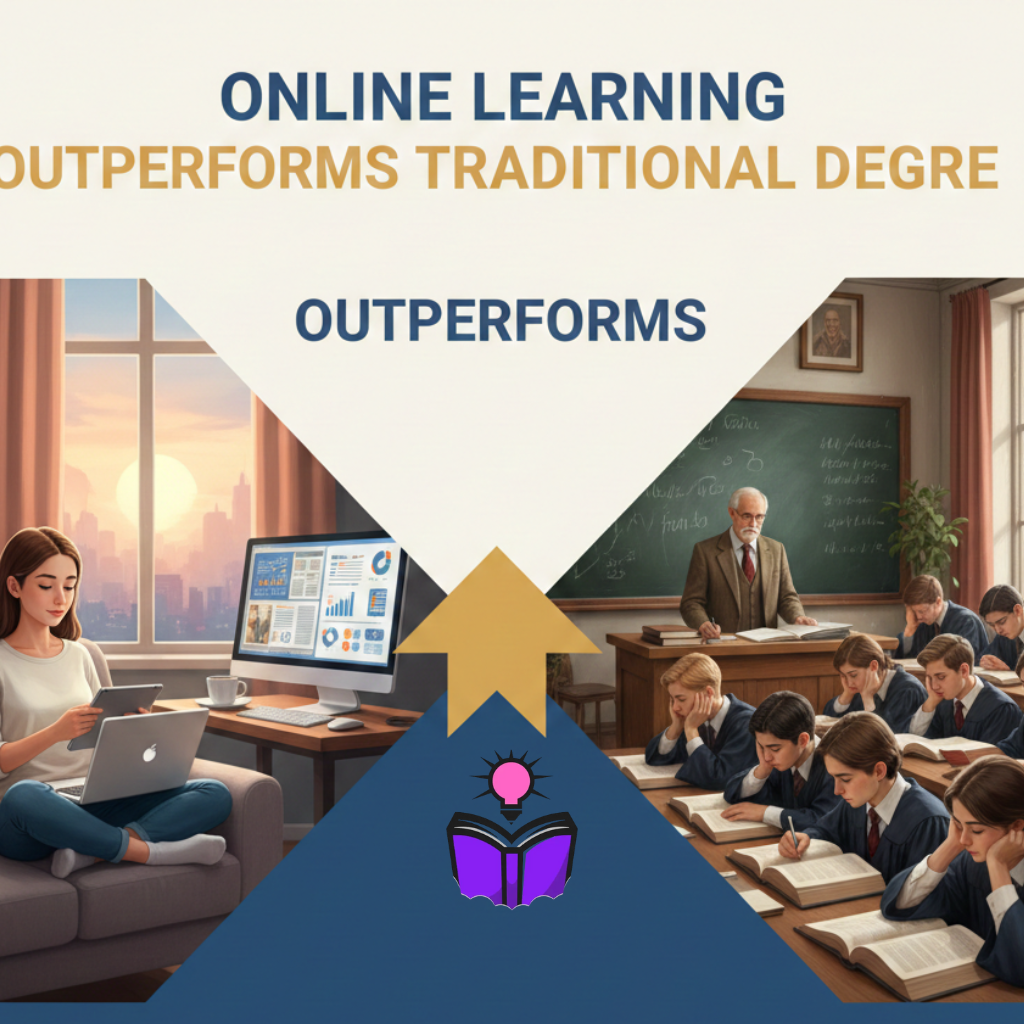
Where Online Learning Outperforms Traditional Degre
1. Rapidly Changing Tech Fields
Careers like data science, AI, cybersecurity, digital marketing, and software development evolve quickly. Online platforms update content faster than most universities can.
2. Skill-Based Professions
Certifications from platforms like Coursera, Udemy, LinkedIn Learning, and Google Career Certificates give learners job-ready skills without years of study.
3. Global Collaboration Opportunities
Online classrooms bring together diverse learners and international instructors—something traditional colleges can’t always offer.
Where Traditional College Still Has the Edge
1. Professions Requiring Licensure
Medicine, law, pharmacy, architecture, and engineering often require degrees from accredited institutions that include extensive in-person training.
2. Research-Based Academics
If you aim for careers in academia, advanced science, or research, traditional universities provide research facilities and mentorship online platforms cannot replicate.
3. Networking and Campus Culture
Campus life remains unmatched for social development, extracurricular engagement, and building lifelong professional networks.
Can Online Learning Fully Replace Traditional Degrees?
Not entirely—but the gap is closing fast.
Online learning is rapidly gaining credibility, especially for skill-based and digital-focused careers. Meanwhile, traditional degrees remain essential for professions requiring hands-on experience, research, or formal licensure.
The future of education is not a replacement—it’s a hybrid.
We are moving toward a world where:
- Students may complete foundational courses online
- Universities may blend virtual and hands-on learning
- Employers may prioritize skills over degrees
- Certifications and micro-credentials may become the norm
Final Thoughts: Your Path Depends on Your Goals
Whether online learning can replace traditional college degrees depends on what you want from your education:
- If you seek flexibility, affordability, and career-focused skills → Online learning is a powerful choice.
- If you need hands-on training, research opportunities, or professional licensing → A traditional college degree is likely essential.
Both paths can lead to success. The key is choosing the path that aligns with your personal goals, career ambitions, and learning style.