
How the Gig Economy Is Affecting Educational Pathways: What Students Need to Know
The gig economy—powered by freelancers, contractors, and on-demand workers—has transformed how people build careers. Platforms like Uber, Fiverr, DoorDash, Upwork, and TaskRabbit make it possible to earn money quickly, work flexibly, and explore multiple income streams. But this shift isn’t only changing the workforce; it’s reshaping educational pathways in surprising ways.
In today’s digital landscape, students are no longer following a single, linear route from high school to college to a traditional 9-to-5 job. Instead, many are weaving together skill-based learning, short-term gigs, online courses, and entrepreneurial experimentation.
This blog breaks down how the gig economy is influencing education, why it matters, and what students, parents, and educators can do to adapt.
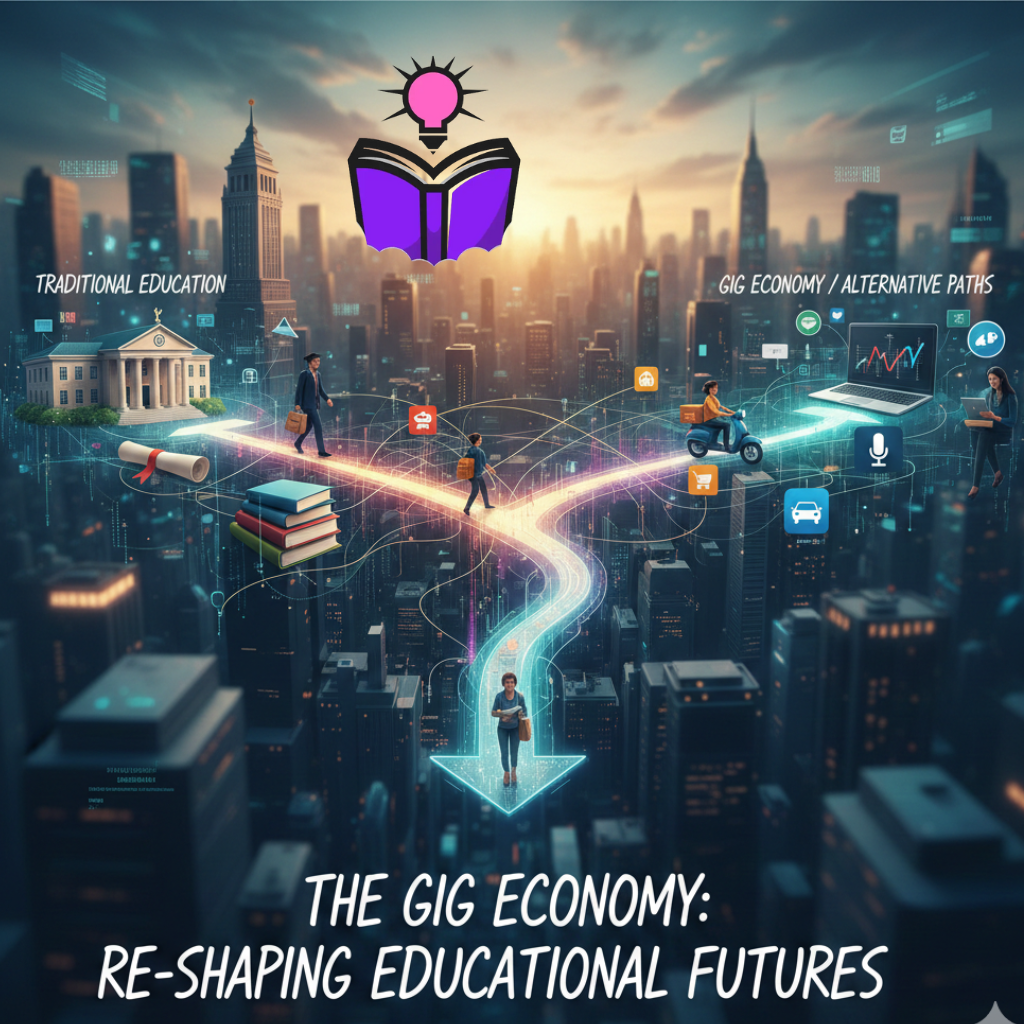
What Is the Gig Economy?
The gig economy refers to a labor market built on flexible, temporary, or freelance jobs. Instead of permanent employment, people take on “gigs”—often digitally matched or app-based tasks.
Common gig economy jobs include:
- Freelance writing, graphic design, coding
- Rideshare and delivery driving
- Online tutoring and virtual assistance
- Short-term project-based consulting
- Micro-entrepreneurship via online marketplaces
Because gig work is accessible, fast, and skill-driven, it’s shifting how young people think about education.
1. Traditional Education Is No Longer the Only Path
In the past, a college degree was the default gateway to stable employment. Today, many students see alternative pathways that fit better with the gig economy.
Rise of Skill-Based Learning
Online platforms like Coursera, Udemy, and LinkedIn Learning let students learn specific, marketable skills without pursuing a four-year degree.
Popular gig-friendly skills include:
- Web design & development
- Digital marketing
- Video editing
- Social media management
- UX/UI design
- Data analysis
These skills can be monetized quickly, which makes students question the long-term value of traditional degrees.

2. Students Are Starting Careers Earlier
Gig work allows young people to start earning while still in school.
How this impacts education:
- More students balance school with part-time gigs, reducing financial stress.
- Real-world income encourages practical learning, not just theory.
- Some students reduce course loads or delay degrees because they’re already making money.
While early earnings sound positive, they can also distract students from completing formal education.
3. Colleges Are Adapting to a More Flexible Workforce
Educational institutions are being pushed to modernize.
New trends include:
- Micro-credentials and digital badges
- Short-term certificates tailored to gig skills
- Business incubators and entrepreneurship programs
- Hybrid and online degree options
Schools know students need flexible, skill-focused training—not just broad academic knowledge.
4. Soft Skills Are Becoming More Valuable Than Ever
Gig work isn’t just about technical abilities. It requires self-management.
Students must learn:
- Time management
- Client communication
- Personal branding
- Financial literacy
- Problem-solving
- Self-discipline and accountability
These soft skills are now essential parts of career readiness.
5. Career Paths Are Becoming Nonlinear
In the gig economy, people shift between multiple roles and industries throughout their lives.
Impact on education:
- Students no longer expect lifelong careers in one field.
- They pursue ongoing learning to stay competitive.
- Educational pathways become modular, not fixed.
This change encourages long-term, continuous skill development instead of one-time degree programs.

6. Gig Work Is Influencing What Majors Students Choose
Some majors naturally align with gig-based careers.
Most affected fields include:
- Creative arts
- Technology
- Business & marketing
- Writing & content creation
- Finance & consulting
Students are choosing programs that help them build independent or freelance careers rather than relying on employers.
7. Challenges Created by the Gig Economy
Although gig work brings opportunities, it also introduces risks.
Potential drawbacks:
- Income instability
- Lack of benefits (healthcare, retirement, paid leave)
- Burnout from juggling multiple gigs
- Temptation to skip formal education for quick money
Students need guidance to balance short-term earnings with long-term career goals.
8. What Students Should Do to Prepare
To thrive in the gig economy, students should focus on developing both technical and personal skills.
Recommended steps:
- Build a portfolio early
- Learn high-demand digital skills
- Take online courses to stay current
- Practice entrepreneurship
- Understand taxes and financial management
- Seek mentorship from freelancers or creators
Education should be viewed as an evolving journey—not a one-time decision.
9. What Parents and Educators Can Do
Parents and schools play a key role in supporting students.
They can:
- Encourage flexible learning experiences
- Introduce financial literacy and career planning
- Teach digital professionalism
- Support passion projects or side hustles
- Emphasize the importance of completing essential education
Preparing students for modern careers means embracing—not resisting—the gig economy.
Conclusion: The Future of Education Is Hybrid
The gig economy is reshaping educational pathways by promoting flexibility, practical skills, and entrepreneurial thinking. Students now blend traditional education with online learning, freelance work, and micro-credentials to build careers that are adaptable and resilient.
As the workforce continues to evolve, so must our approach to education. The most successful learners will be those who are curious, independent, digitally skilled, and willing to reinvent themselves throughout their lives.