
How to Deal with Procrastination and Stay on Track: The Hidden Enemy of Success
Procrastination doesn’t arrive loudly.
It sneaks in quietly—disguised as “I’ll do it later,” “I just need a break,” or the classic, “I work better under pressure.”
But beneath those harmless excuses lies a powerful force capable of delaying your dreams, damaging your productivity, and keeping you stuck in the same place for months… or even years.
Here’s the twist:
Procrastination isn’t laziness. It’s psychology.
Once you understand how it works, you can defeat it—and reclaim your focus.
Let’s uncover the science, the strategies, and the habits that can help you break free and finally stay on track.
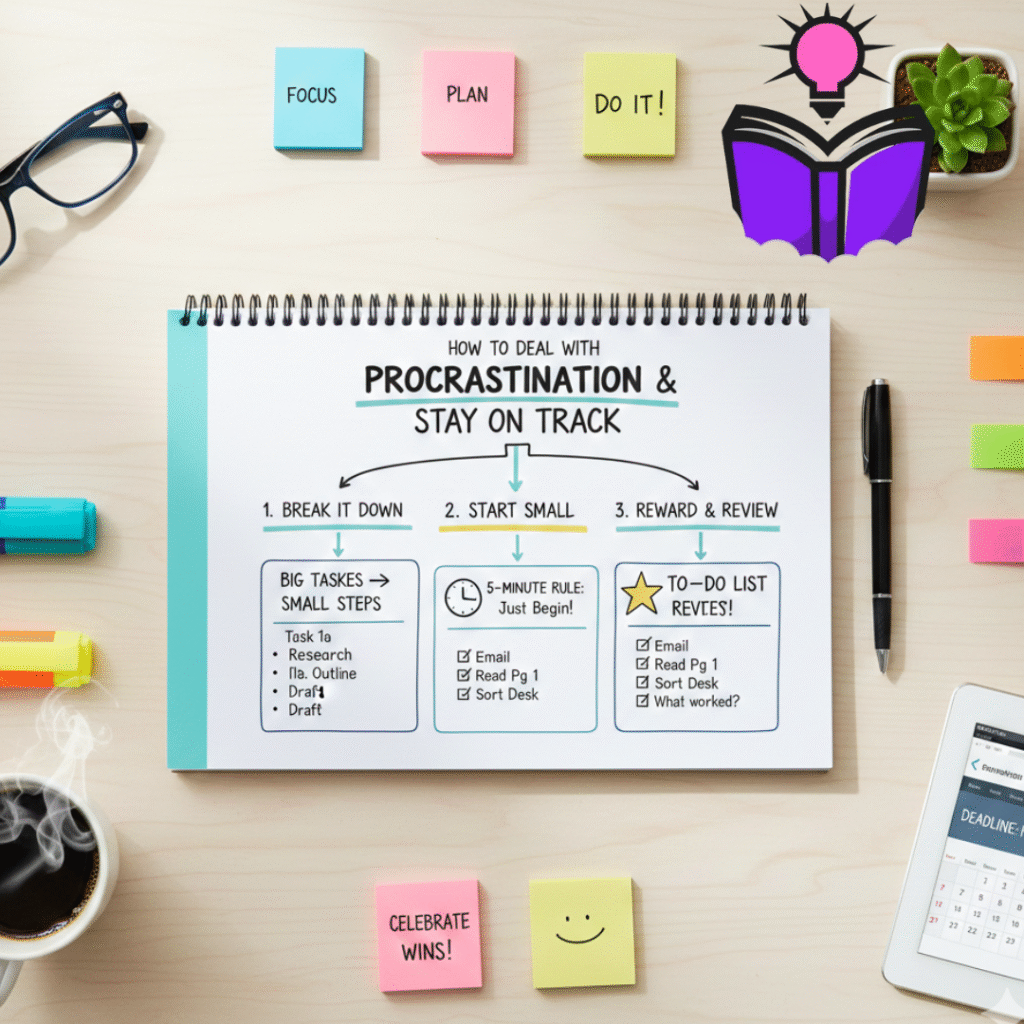
1. Why We Procrastinate: The Real Reason (It’s Not What You Think)
Most people assume procrastination is a time-management problem.
In reality, it’s an emotion-management problem.
Your brain avoids tasks that feel:
- Overwhelming
- Boring
- Confusing
- High-pressure
- Risky
So instead of starting the task, your brain looks for relief—social media, snacks, the sudden need to clean your room, anything that gives quick comfort.
Once you know this, you stop blaming yourself… and start working smarter.
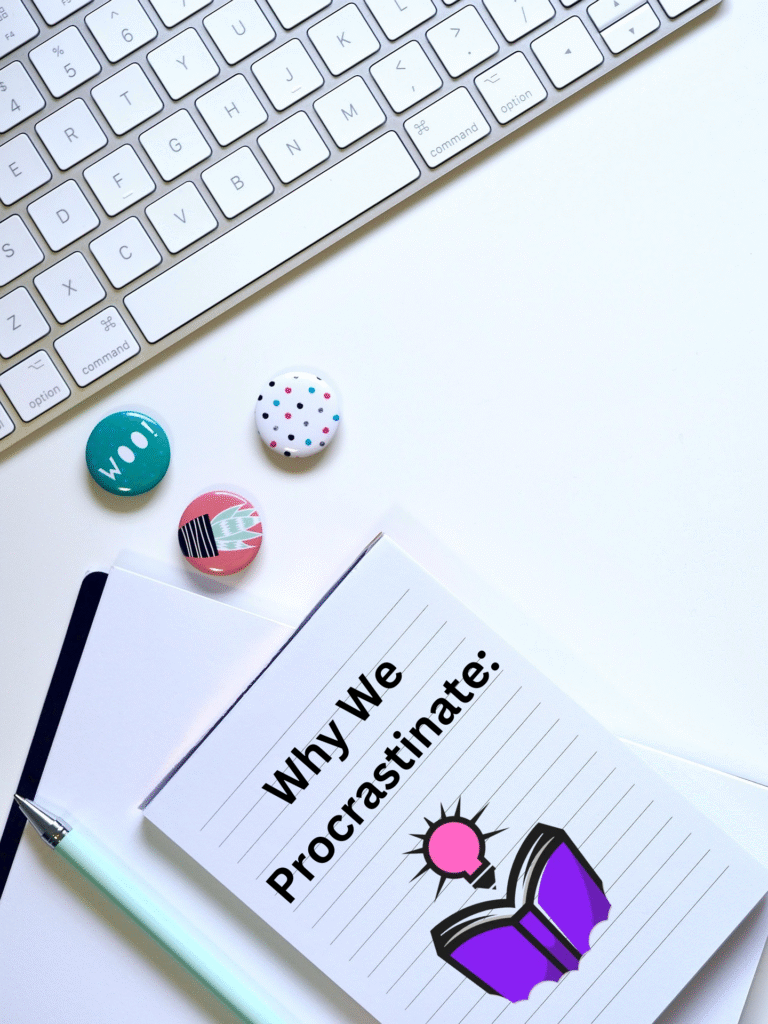
2. Break the Task Into Micro-Steps (The 2-Minute Rule)
If a task feels huge, your brain will naturally resist it.
Here’s a simple trick:
Shrink the task until it feels easy.
Examples:
- Write 1 sentence instead of a full essay.
- Read 1 page instead of a whole chapter.
- Study for 2 minutes instead of 2 hours.
Why it works:
Starting creates momentum, and momentum produces motivation.
You don’t need to feel ready—you just need to begin.
3. Use the “5-Second Decision” to Stop Overthinking
Procrastination thrives in hesitation.
When you wait too long, your brain talks you out of doing the work.
Here’s the solution:
Count down: 5–4–3–2–1, and start immediately.
This short circuit interrupts your mental distractions and replaces them with action.
Your brain can’t argue with movement.

4. Build a Distraction-Free Zone (Your Productivity Sanctuary)
You can’t win against procrastination if you’re surrounded by triggers.
Create a space that supports focus:
- Keep your phone out of reach or on “Do Not Disturb.”
- Close unnecessary tabs.
- Use website blockers during study time.
- Keep only the essentials on your desk.
Think of this space as your zone of commitment.
When you enter it, your mind knows it’s time to work.

5. Try the Pomodoro Technique (Your Secret Time Weapon)
Procrastination often comes from feeling like a task will take forever.
The Pomodoro method solves this by breaking time into:
- 25 minutes of focused work
- 5 minutes of rest
You only commit to 25 minutes at a time—not a full day.
This makes tasks feel manageable, reduces anxiety, and boosts productivity.
Suspense twist:
Most people discover they’re capable of far more than they thought once they start the first 25 minutes.
6. Remove Perfectionism—the Silent Saboteur
Perfectionism fuels procrastination by whispering:
- “What if it’s not good enough?”
- “What if I fail?”
- “What if people judge me?”
But here’s the truth:
Perfect is impossible. Progress is everything.
Aim for “done,” not “perfect.”
You can always improve a finished project, but you can’t fix a task you never start.
7. Build Accountability (Because Willpower Isn’t Enough)
If you struggle to stay on track, you’re not alone.
Most successful people rely on accountability systems:
- Tell a friend your goals
- Join a study group
- Use accountability apps
- Set deadlines and rewards
- Share progress with someone you trust
When someone else is watching, motivation skyrockets.
8. Celebrate Every Small Victory
Your brain loves rewards.
Celebrating small wins trains your mind to associate effort with pleasure.
Examples:
- Finishing a chapter → take a short walk
- Completing an assignment → treat yourself
- Studying consistently → track your streak
These small celebrations build motivation like fuel for your productivity engine.

9. Understand Your Peak Hours (Work With Your Brain, Not Against It)
Everyone has “focus windows” where the mind performs best.
You might be:
- A morning thinker
- An afternoon performer
- A night owl genius
Track your energy for one week.
Then schedule your hardest tasks during your focus peak for maximum efficiency.
This simple shift can double your productivity.
Conclusion: Procrastination Is a Battle—But One You Can Win
Procrastination isn’t a sign of weakness.
It’s a habit.
And like all habits, it can be rewired.
When you understand why you procrastinate—and use the right tools—you gain control over your time, your goals, and your future.
The suspenseful truth?
Your most productive, focused, unstoppable self is already inside you—waiting for you to take the first step.
Start small.
Start now.
Start today.