
How to Make a Study Plan That Fits Your Schedule (Without Burning Out)
Have you ever sat down to study with the best intentions… only to feel overwhelmed within minutes? You’re not lazy. You’re not unmotivated. Chances are, you’re missing a study plan that actually fits your schedule.
Here’s the suspenseful truth most students discover too late:
👉 A perfect study plan on paper is useless if it doesn’t work in real life.
In this guide, you’ll learn how to create a realistic, flexible, and effective study plan—one that adapts to your daily routine, not the other way around.

Why Most Study Plans Fail (And Yours Doesn’t Have To)
Before we build a plan that works, let’s expose why traditional study plans fall apart:
- They assume unlimited time and energy
- They ignore work, family, and personal responsibilities
- They rely on motivation instead of systems
- They’re too rigid to survive real life
The key to success isn’t studying more. It’s studying smarter and consistently.
Step 1: Understand Your Real Schedule (Not Your Ideal One)
This is where most people make their first mistake.
Instead of asking, “When should I study?” ask:
“When do I realistically have time and energy?”
Action Step:
For 2–3 days, track:
- Work or school hours
- Commute time
- Meals and chores
- Free time (even small gaps)
- Energy levels throughout the day
You’ll uncover hidden time blocks—early mornings, lunch breaks, or evenings—that can become powerful study sessions.
📌 SEO Tip: This step helps you build a realistic study plan for busy schedules.
Step 2: Define Clear and Specific Study Goals
A study plan without goals is just a timetable.
Instead of vague goals like:
❌ “Study math”
Use clear, outcome-based goals:
✅ “Complete 20 algebra practice questions”
✅ “Summarize Chapter 3 in my own words”
Break Big Goals Into Small Wins
Large goals create pressure. Small goals create momentum—and momentum keeps you going.
Step 3: Choose the Right Study Time for Each Subject
Not all subjects require the same energy level.
- High-focus subjects (math, science, coding): Schedule when your mind is sharp
- Low-focus tasks (reading, reviewing notes): Fit into slower hours
If you’re exhausted after work, don’t fight biology formulas. Instead, review flashcards or watch a short explainer video.
This is how you fit studying into a busy daily schedule without burnout.
Step 4: Use Time Blocking (The Secret Weapon of Top Students)
Time blocking means assigning specific tasks to specific time slots.
Example:
- 7:00–7:30 PM → Review chemistry notes
- 7:30–7:45 PM → Break
- 7:45–8:15 PM → Practice questions
Short, focused sessions (25–45 minutes) beat long, unfocused marathons every time.
⏳ Pro Tip: Use the Pomodoro Technique to stay focused and avoid mental fatigue.
Step 5: Make Your Study Plan Flexible (This Is Crucial)
Life will interrupt you. That’s not failure—it’s normal.
A smart study plan includes:
- Buffer days for missed sessions
- Optional “catch-up” time slots
- Room to adjust without guilt
Remember: Consistency beats perfection.

Step 6: Use Tools That Work for You
Your study plan should be easy to follow.
Popular tools include:
- Google Calendar or Notion
- Physical planners
- Study apps with reminders
- Simple to-do lists
Choose what you’ll actually use—not what looks impressive.
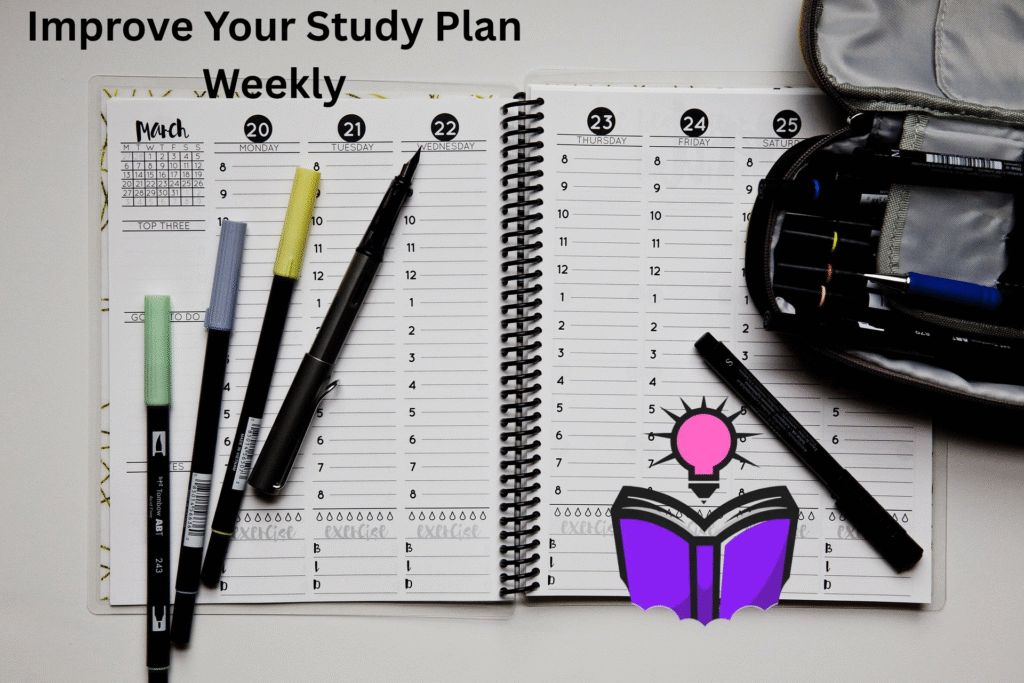
Step 7: Review and Improve Your Study Plan Weekly
Here’s the twist most people miss:
A study plan is not permanent.
At the end of each week, ask:
- What worked well?
- What felt stressful?
- What can I adjust?
Small improvements each week lead to massive long-term success.
Final Thoughts: Your Schedule Is Not the Enemy
The biggest myth about studying is that you need more time.
What you really need is a study plan that respects your life.
When your plan fits your schedule:
- Studying feels lighter
- Progress feels real
- Motivation comes naturally
And suddenly, success doesn’t feel impossible—it feels inevitable.
Ready to Take Action
Start today. Not tomorrow. Not next week.
Open your calendar, find just 30 minutes, and build your first study block.
Because the best study plan isn’t the most complicated one—
It’s the one you’ll actually follow. 📚✨