
Why Flashcards Are So Effective for Exam Preparation
Flashcards work because they use active recall — the process of pulling information from memory instead of passively rereading it.
Benefits of flashcards include:
- Stronger long-term memory
- Faster revision sessions
- Better focus and engagement
- Clear identification of weak areas
This makes flashcards one of the most powerful study tools for exams.
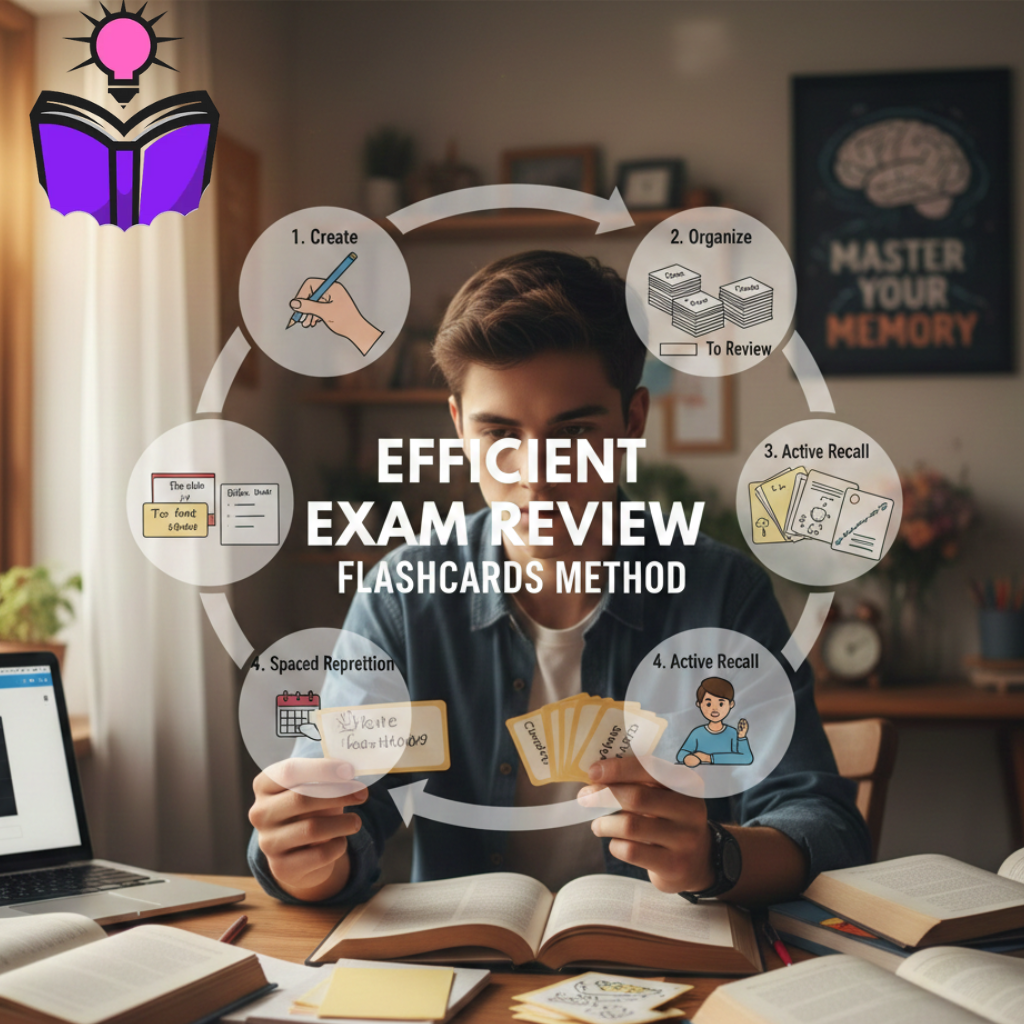
The Science Behind Flashcards (Why They Work)
Flashcards combine two proven learning techniques:
- Active recall – strengthens memory pathways
- Spaced repetition – reviews information at the right time
Together, they reduce study time while increasing retention — a perfect formula for exam success.
Step 1: Create Flashcards the Right Way
Poorly designed flashcards lead to poor results.
Follow these rules:
- One question or concept per card
- Keep answers short and clear
- Use your own words
- Avoid copying long textbook definitions
Think of each flashcard as a test, not a note.
Step 2: Turn Topics into Questions
Instead of writing information, write questions.
For example:
- ❌ “Photosynthesis definition”
- ✅ “What are the steps of photosynthesis?”
Questions force your brain to think — and thinking is where learning happens.
Step 3: Study in Short, Focused Sessions
Flashcards are perfect for quick reviews.
Try:
- 15–30 minute sessions
- Multiple sessions per day
- Studying during breaks or commute
Short sessions prevent burnout and keep your brain fresh.
Step 4: Use the Spaced Repetition Method
Here’s the mistake most students make: reviewing all flashcards every day.
Instead:
- Review difficult cards more often
- Review easy cards less frequently
- Gradually increase the gap between reviews
This method ensures you review information right before you forget it — maximizing efficiency.
Step 5: Shuffle and Mix Your Flashcards
Studying in the same order creates false confidence.
Shuffle your flashcards to:
- Strengthen recall
- Prepare for exam-style questions
- Avoid pattern memorization
Your brain learns best when challenged unpredictably.
Step 6: Say the Answer Out Loud
Silent thinking feels easier — but speaking improves retention.
When using flashcards:
- Say the answer before flipping the card
- Explain it briefly in your own words
This activates more areas of the brain, making learning stick.
Step 7: Track Weak Areas Strategically
Flashcards reveal what you don’t know — and that’s powerful.
Create three piles:
- Mastered
- Needs review
- Difficult
Focus most of your time on the “difficult” pile for maximum results.
Digital vs Physical Flashcards: Which Is Better?
Both work — if used correctly.
Physical flashcards:
- Reduce screen fatigue
- Improve focus
- Feel more engaging
Digital flashcards:
- Automate spaced repetition
- Easy to carry
- Great for large content volumes
Choose the format you’ll actually use consistently.
Common Flashcard Mistakes to Avoid
Avoid:
- Overloading cards with information
- Passive flipping without recall
- Ignoring spaced repetition
- Studying only what feels easy
Flashcards work when they challenge you — not when they comfort you.
The Hidden Advantage of Flashcards
Flashcards don’t just help you memorize — they:
- Build exam confidence
- Reduce last-minute cramming
- Improve time management
When used consistently, they turn revision into a controlled, stress-free process.
Final Thoughts: Small Cards, Big Results
Flashcards may look basic, but their impact is powerful.
When used strategically, they can help you:
- Learn faster
- Remember longer
- Perform better in exams
The real question isn’t whether flashcards work —
It’s whether you’re using them the right way.