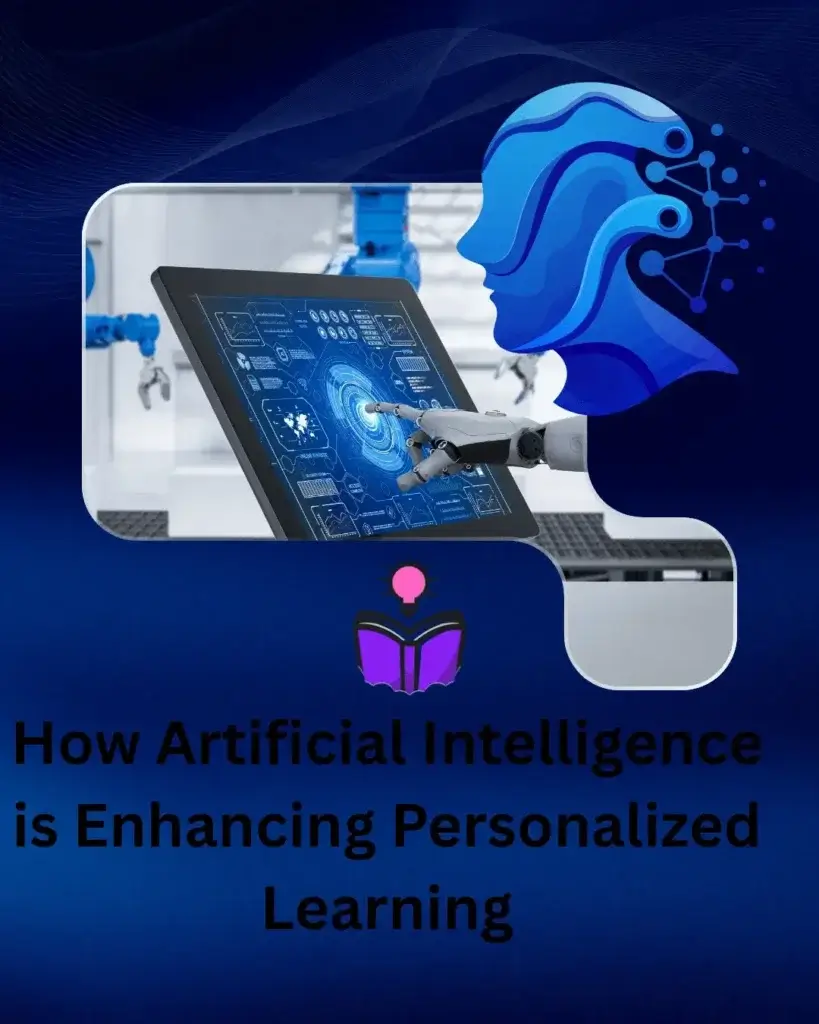
How Artificial Intelligence is Enhancing Personalized Learning
Introduction
Education in the United States is undergoing one of its most significant transformations in decades, driven largely by advancements in artificial intelligence. Traditional classroom models, where every student follows the same pace and learns in the same way, are rapidly evolving into more dynamic and individualized experiences. At the center of this shift is AI in education, a powerful force reshaping how students learn, how teachers teach, and how academic success is measured.
One of the most impactful applications of AI is personalized learning, an approach that adapts educational content, pace, and teaching methods to match each student’s unique strengths, weaknesses, and learning style. Instead of treating students as a uniform group, AI enables education systems to recognize individuality at scale.
In the United States, where classrooms are often diverse in ability levels, backgrounds, and learning needs, AI-driven personalized learning is not just an innovation—it is becoming a necessity. From elementary schools to universities and online learning platforms, artificial intelligence is making education more responsive, engaging, and effective.
This article explores how AI is enhancing personalized learning, the technologies behind it, the benefits for students and educators, and what the future may hold for AI-powered education.
Understanding Personalized Learning in the Modern Education System
Personalized learning is an educational approach that aims to tailor instruction to the needs of each learner. Instead of following a fixed curriculum timeline, students progress based on mastery of concepts. Some may advance quickly through material they grasp easily, while others receive additional support in areas where they struggle.
Traditionally, implementing personalized learning has been difficult due to classroom size, limited teacher resources, and time constraints. Even the most dedicated educators struggle to provide individual attention to every student in a class of 25 to 35 learners.
This is where artificial intelligence changes the game. By analyzing large amounts of student data—such as quiz results, reading speed, engagement levels, and problem-solving patterns—AI systems can create detailed learning profiles. These profiles allow educational platforms to adjust content in real time, ensuring that every student receives a learning experience suited specifically to them.
In essence, AI acts like a digital assistant for both students and teachers, continuously optimizing the learning journey.
The Role of Artificial Intelligence in Education
Artificial intelligence in education works through a combination of machine learning algorithms, natural language processing, and predictive analytics. These technologies allow systems to learn from student behavior and improve recommendations over time.
When a student uses an AI-powered learning platform, the system observes how they interact with the material. It tracks which questions they answer correctly, where they make mistakes, how long they take to respond, and even the types of explanations that help them improve. Based on this data, the system adjusts future lessons.
For example, if a student consistently struggles with algebraic equations, the AI may provide additional practice problems, simplified explanations, or even interactive visual aids. On the other hand, if a student excels in reading comprehension, the system may introduce more advanced texts to keep them challenged.
This constant feedback loop is what makes AI-driven personalized learning so effective. Unlike static textbooks or pre-recorded lessons, AI systems evolve with the learner.
Adaptive Learning Systems: The Core of AI-Powered Education
One of the most important innovations in this space is adaptive learning technology. Adaptive learning systems are platforms that automatically adjust educational content based on student performance in real time.
In the United States, many schools and online education providers are integrating adaptive learning into their curricula. These systems are designed to ensure that no student is left behind while also preventing advanced learners from becoming bored or disengaged.
Adaptive platforms typically follow a structured process:
First, they assess the student’s current knowledge level through diagnostic tests or initial activities. Then, they begin delivering content that matches that level. As the student progresses, the system continuously evaluates performance and adjusts the difficulty accordingly.
What makes adaptive learning particularly powerful is its ability to identify knowledge gaps that may not be obvious to teachers. A student might appear to understand a topic in class but still struggle with underlying concepts. AI can detect these subtle gaps and address them before they become bigger academic issues.
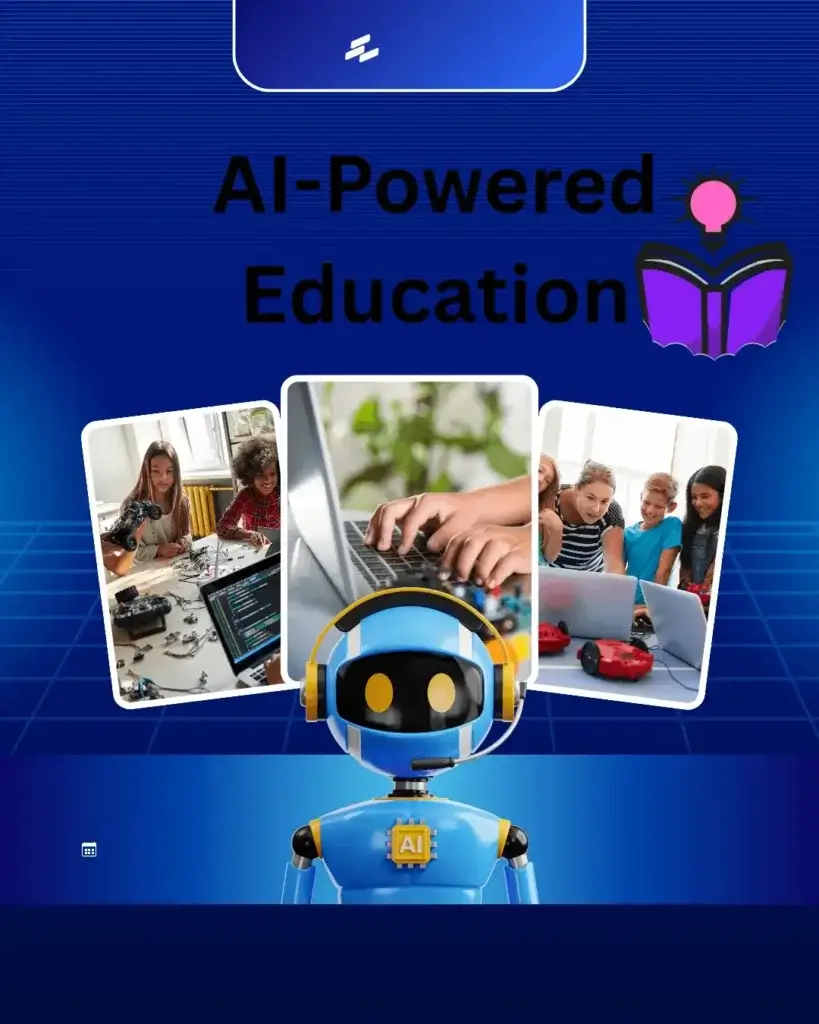
AI in Online Learning Platforms in the United States
The rise of online education in the United States has accelerated the adoption of AI technologies. Digital platforms used by millions of students now rely heavily on machine learning algorithms to personalize content delivery.
These platforms offer interactive lessons, real-time quizzes, and instant feedback. More importantly, they create a learning environment that is available anytime and anywhere, which is especially valuable for students balancing school with extracurricular activities or part-time jobs.
AI-powered systems in online learning also provide recommendations for study schedules, suggest revision topics, and even predict exam performance based on historical data. This helps students stay on track and manage their study time more effectively.
In higher education, universities are also using AI to support large lecture courses. Instead of relying solely on teaching assistants, AI chat systems can answer common student questions instantly, freeing up instructors to focus on more complex academic support.
Benefits of AI-Driven Personalized Learning for Students
The impact of AI on students is both practical and psychological. One of the most important benefits is improved engagement. When learning materials are tailored to a student’s level and interests, they are more likely to stay motivated and focused.
Another key benefit is improved academic performance. Personalized learning ensures that students do not move forward with gaps in understanding. Instead, they master each concept before progressing, leading to stronger long-term retention.
AI also helps reduce learning anxiety. Many students in the United States experience stress when they feel left behind in traditional classroom settings. With AI systems providing customized support, students can learn at their own pace without the pressure of keeping up with peers.
Additionally, AI encourages independence. Students are empowered to take control of their learning journey, making decisions about what to study and when to review concepts. This builds self-discipline and lifelong learning skills that are essential in today’s fast-changing world.
How Teachers Benefit from AI in the Classroom
While AI is often discussed in terms of student benefits, its impact on teachers is equally significant. Educators in the United States face increasing demands, from large class sizes to administrative responsibilities. AI helps reduce this burden by automating repetitive tasks and providing actionable insights.
For example, AI can automatically grade multiple-choice quizzes, track student progress, and generate performance reports. This saves teachers valuable time that can be redirected toward instruction and mentorship.
AI also helps teachers identify struggling students earlier. Instead of waiting for exam results, educators can receive real-time alerts when a student begins to fall behind. This allows for timely intervention, which can significantly improve academic outcomes.
Furthermore, AI provides teachers with detailed analytics about class performance. They can see which topics are most challenging for students and adjust lesson plans accordingly. This makes instruction more efficient and targeted.
Ultimately, AI does not replace teachers—it enhances their ability to teach effectively.
The Power of Data Analytics in Personalized Learning
At the heart of AI-driven education is data. Every interaction a student has with a learning platform generates valuable information. This includes quiz results, time spent on tasks, accuracy rates, and engagement patterns.
AI systems analyze this data to build predictive models that forecast student performance. For instance, if a student is likely to struggle with an upcoming topic, the system can intervene early with additional resources.
Data analytics also helps education institutions make broader decisions. Schools can identify trends across classrooms, evaluate curriculum effectiveness, and allocate resources more efficiently.
In the United States, where education systems vary widely across states and districts, this data-driven approach is helping create more consistent and equitable learning experiences.
Challenges and Concerns of AI in Education
Despite its many advantages, AI in personalized learning is not without challenges. One of the biggest concerns is data privacy. Since AI systems rely heavily on student data, ensuring that this information is securely stored and ethically used is essential.
There is also the issue of algorithmic bias. If AI systems are trained on incomplete or biased data, they may produce unfair learning recommendations. This can potentially impact student outcomes if not carefully monitored.
Another concern is over-reliance on technology. While AI can greatly enhance learning, it should not replace human interaction entirely. Education is not just about information delivery—it is also about mentorship, emotional support, and social development.
Additionally, access to AI-powered tools is not equal across all schools in the United States. Some districts have advanced digital infrastructure, while others lack basic technological resources. Bridging this digital divide remains an important challenge.
The Future of AI in Personalized Learning
The future of AI in education is expected to become even more immersive and intelligent. As machine learning models continue to evolve, personalized learning systems will become more accurate in understanding student behavior and predicting learning needs.
We may see AI tutors that function almost like human instructors, capable of holding conversations, explaining complex topics in multiple ways, and adapting teaching styles in real time. Virtual and augmented reality may also integrate with AI to create fully immersive learning environments.
In the United States, education systems are likely to continue investing in AI-driven solutions to improve student outcomes and reduce achievement gaps. Schools may increasingly rely on hybrid learning models that combine traditional teaching with AI-powered digital platforms.
Over time, education could shift from a standardized system to a fully personalized ecosystem where every student follows a unique learning path designed specifically for them.
Conclusion
Artificial intelligence is fundamentally reshaping the landscape of education in the United States. By enabling personalized learning, AI is helping students learn more effectively, teachers teach more efficiently, and schools operate more intelligently.
From adaptive learning systems to advanced data analytics, AI is creating a more responsive and inclusive educational experience. While challenges such as privacy, bias, and access still exist, the potential benefits are too significant to ignore.
As technology continues to evolve, AI-driven personalized learning will likely become a standard part of education, not just an innovation. It represents a shift toward a future where every student has the opportunity to learn in a way that best suits them, unlocking their full potential.