
How to Stay Focused During Long Study Sessions: A Complete Guide for Students in the United States
Staying focused during long study sessions can feel like running a mental marathon. Whether you’re a high school student preparing for the SAT, a college student at a demanding university like Harvard University, or working toward a graduate degree at University of California, Los Angeles, maintaining concentration for hours at a time is one of the biggest academic challenges.
In the United States, students juggle academics with part-time jobs, extracurricular activities, internships, and family responsibilities. Add smartphones, social media, and streaming platforms to the mix, and distractions are everywhere. The good news? Focus is a skill. And like any skill, it can be trained, strengthened, and mastered.
In this comprehensive guide, you’ll learn practical, science-backed strategies to help you stay focused during long study sessions, boost productivity, and actually retain what you learn.

Why Staying Focused Is So Hard Today
Before diving into solutions, it helps to understand the problem.
American students are growing up in a hyper-connected environment. Notifications, emails, group chats, and social media updates constantly compete for attention. Research shows that every time you switch tasks—even briefly—it takes time for your brain to fully re-engage.
Long study sessions become exhausting not because the material is impossible, but because your attention is fragmented. Focus requires mental energy. When that energy is constantly drained by distractions, even simple tasks feel overwhelming.
The key isn’t forcing yourself to “try harder.” It’s designing your study sessions in a way that supports your brain.
Set a Clear Study Goal Before You Start
One of the most powerful ways to stay focused is also one of the simplest: know exactly what you’re trying to accomplish.
Instead of saying, “I’m going to study biology for three hours,” try:
- “I will review Chapters 4 and 5 and complete 25 practice questions.”
- “I will outline my research paper and draft the introduction.”
- “I will memorize 40 vocabulary words and test myself.”
When your goal is specific, your brain has direction. Without direction, your mind wanders.
Students preparing for exams like the SAT or ACT often experience burnout because they sit down without a defined objective. Clear targets make your session measurable and more motivating.

Use the Pomodoro Technique (But Adapt It)
You’ve probably heard of the Pomodoro Technique: 25 minutes of focused work followed by a 5-minute break. After four cycles, you take a longer break.
This method works because it aligns with how your brain naturally operates. Most people can sustain high levels of focus for about 25–45 minutes before mental fatigue sets in.
However, you don’t have to stick rigidly to 25 minutes. Some students prefer 40-minute blocks with 10-minute breaks. The key is intentional focus followed by intentional rest.
During your focus block:
- Silence your phone.
- Close unnecessary tabs.
- Commit to working on one task only.
During your break:
- Stand up.
- Stretch.
- Walk around.
- Avoid scrolling social media, which can pull you into a longer distraction spiral.
Structured breaks prevent burnout and help you stay consistent during long study sessions.

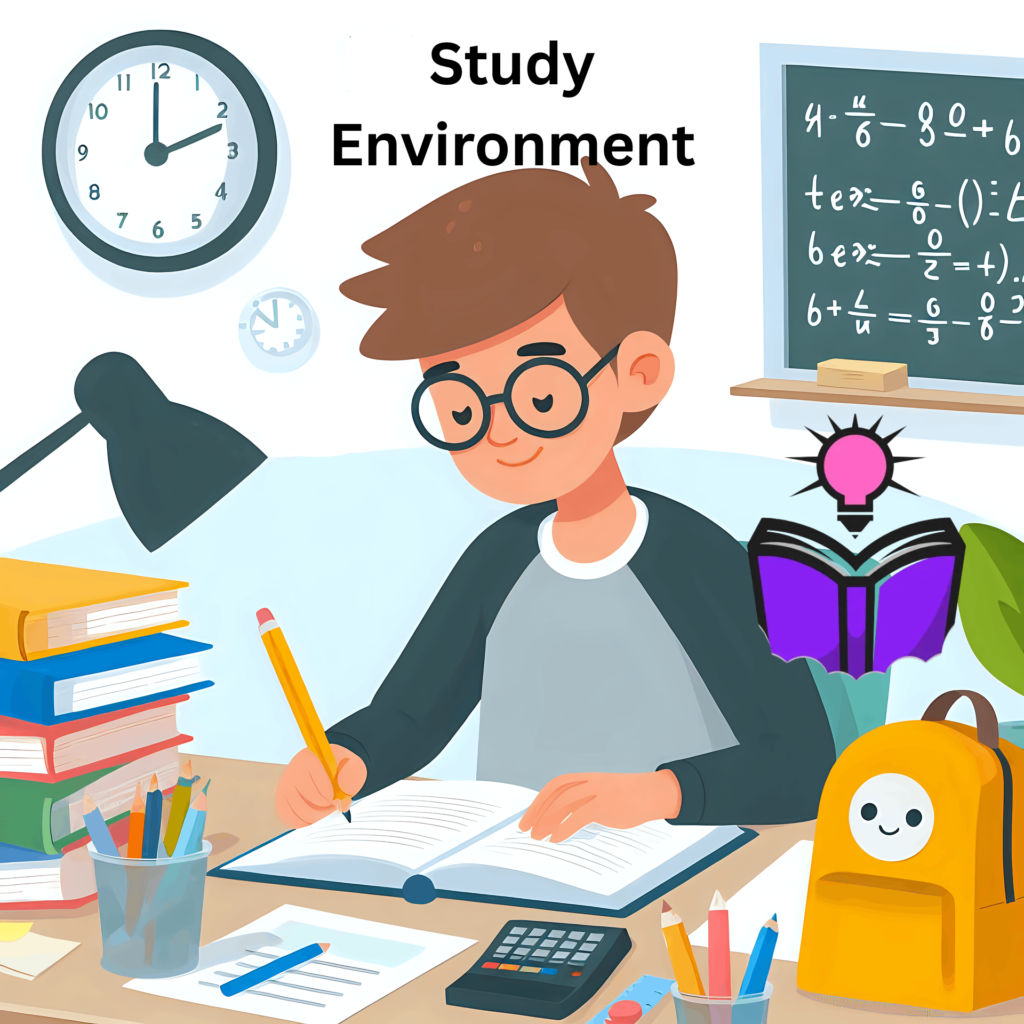
Create a Study Environment That Supports Focus
Your environment shapes your behavior more than you realize.
If you’re studying in a noisy dorm room, near a TV, or with your phone face-up on your desk, your brain is constantly scanning for distractions.
Students across the United States often rotate between libraries, coffee shops, and home desks. The most productive environments share common traits:
- Minimal clutter
- Comfortable but not overly relaxing seating
- Good lighting
- Limited noise
Some students find public libraries ideal because they create a “social pressure” to stay focused. If you’re on a college campus—whether it’s University of Texas at Austin or New York University—quiet study floors can dramatically improve concentration.
If you’re studying at home, dedicate a specific space for studying only. Avoid studying in bed. Your brain associates bed with sleep, not productivity.
Manage Digital Distractions Strategically
In the U.S., the average student checks their phone dozens of times per day. Even seeing your phone reduces cognitive performance because part of your brain is anticipating a notification.
Here’s how to regain control:
Turn on “Do Not Disturb” mode during study blocks.
Place your phone out of reach or in another room.
Use website blockers to limit access to social media.
Log out of distracting apps before studying.
If you need your laptop for research, consider using separate browser profiles—one for studying, one for personal browsing.
You don’t need perfect discipline. You need systems that reduce temptation.
Fuel Your Brain the Right Way
Long study sessions demand physical energy. If your body is depleted, your mind will be too.
Students often rely on caffeine and sugary snacks, especially during finals week. While coffee can improve alertness, too much caffeine can increase anxiety and cause energy crashes.
To stay focused longer:
Eat balanced meals with protein, healthy fats, and complex carbohydrates.
Stay hydrated—dehydration reduces cognitive performance.
Choose snacks like nuts, yogurt, fruit, or whole-grain options instead of candy.
If you’re pulling a long study day at the library, pack food ahead of time so you’re not relying on vending machines.
Use Active Study Techniques
Passive studying—like rereading notes or highlighting textbooks—creates the illusion of productivity without deep learning.
Active studying keeps your brain engaged, which naturally improves focus.
Instead of rereading a chapter, try:
Explaining the concept out loud as if teaching someone.
Writing practice questions and answering them without looking at notes.
Using flashcards and spaced repetition.
Summarizing material from memory.
The more your brain works, the less it wanders.
Students in rigorous programs—whether pre-med, engineering, or law—often find that active recall dramatically shortens the total study time needed.

Train Your Brain Like a Muscle
Focus isn’t just about willpower. It’s about mental endurance.
If you currently struggle to focus for 20 minutes, don’t expect to suddenly study for four hours straight.
Start small.
Work in 20-minute focused intervals for a week.
Increase to 30 minutes the next week.
Gradually build your endurance.
Just like physical training, consistency matters more than intensity.
Get Enough Sleep (Especially in the U.S. College Culture)
American college culture sometimes glorifies all-nighters. But sleep deprivation destroys focus, memory, and cognitive function.
Research consistently shows that adults need 7–9 hours of sleep per night for optimal performance.
If you’re sacrificing sleep to study longer, you’re likely reducing the quality of your learning.
Prioritize:
- Consistent sleep schedule
- Limiting screens before bed
- Avoiding late-night caffeine
You’ll accomplish more in a focused 3-hour session after good sleep than in 6 distracted hours while exhausted.
Incorporate Movement to Reset Your Brain
Sitting for hours reduces blood flow and increases mental fatigue.
Short bursts of movement can restore alertness. During breaks:
Walk around your building.
Do light stretching.
Try 20 jumping jacks.
Step outside for fresh air.
Even a 5-minute movement break can significantly improve the next study block.
Many universities across the United States are encouraging movement-based wellness initiatives because physical activity is directly linked to academic performance.

Practice Mindfulness to Improve Attention
Mindfulness training strengthens attention control. You don’t need to meditate for an hour.
Start with 2–5 minutes of simple breathing before studying:
- Close your eyes.
- Focus on your breath.
- When your mind wanders, gently bring it back.
This trains your brain to return to focus when distracted.
Over time, you’ll notice it becomes easier to catch yourself drifting during study sessions.
Use Background Sound Wisely
Silence works for some students, but others focus better with background noise.
Options that may help:
- Instrumental music
- Lo-fi beats
- Nature sounds
- White noise
Avoid music with lyrics if you’re reading or writing, as it competes with language processing.
Experiment to find what works for you.
Break Large Tasks Into Smaller Pieces
Long study sessions often feel overwhelming because the task seems too big.
Instead of “Study for midterms,” try:
- Review lecture slides 1–20
- Complete practice set A
- Create summary sheet for Chapter 3
Small wins create momentum. Momentum sustains focus.
Study With Accountability
Studying alone can lead to procrastination.
Consider:
- Virtual study sessions with friends
- Study groups
- Library meetups
- Silent co-working sessions
Even knowing someone else is studying at the same time can increase discipline.
Across campuses in cities like Los Angeles and Chicago, students often form accountability groups during finals to maintain long hours of focused preparation.
Recognize When You Need a Longer Break
Sometimes lack of focus isn’t laziness—it’s mental overload.
If you:
- Reread the same sentence multiple times
- Feel irritable
- Can’t absorb information
It may be time for a 30–60 minute reset.
Take a walk, eat a meal, or rest briefly. Then return refreshed.
Long study sessions should include both micro-breaks and occasional macro-breaks.
Build a Consistent Study Routine
Your brain loves patterns.
If you study every weekday from 6 PM to 9 PM, your mind begins to associate that time with focus.
Routine reduces the mental resistance of getting started.
Whether you’re a high school student balancing AP classes or a college student managing coursework and internships, consistency beats last-minute cramming.
Avoid Multitasking at All Costs
Watching TV while studying. Texting while reading. Switching between assignments.
Multitasking feels efficient—but it reduces comprehension and increases study time.
Focus on one subject at a time. Complete a block. Then switch.
Deep focus is far more powerful than divided attention.
Use Visualization for Motivation
Before beginning a long session, visualize:
- Completing the assignment
- Walking into the exam confident
- Seeing your improved GPA
Linking focus to long-term goals strengthens commitment.
Students aiming for competitive graduate programs or scholarships often find that connecting daily effort to future success keeps them motivated during long sessions.
Final Thoughts: Focus Is a Skill You Can Master
Staying focused during long study sessions isn’t about having superhuman discipline. It’s about creating the right systems, environment, and habits.
To summarize the core principles:
- Set specific goals
- Use timed focus blocks
- Control your environment
- Minimize digital distractions
- Fuel your body properly
- Sleep consistently
- Use active study methods
- Take strategic breaks
In today’s distraction-heavy world, focused attention is a competitive advantage. Whether you’re studying in a quiet suburban home, a bustling city apartment, or a university library anywhere in the United States, you have the ability to train your brain for sustained concentration.
Start small. Stay consistent. Adjust as needed.
Over time, long study sessions will feel less draining—and far more productive.
Your future self will thank you.